E-Commerce Strategies
Amazon's 2025 policy changes can impact your business significantly if not addressed promptly. Here's what you need to know:
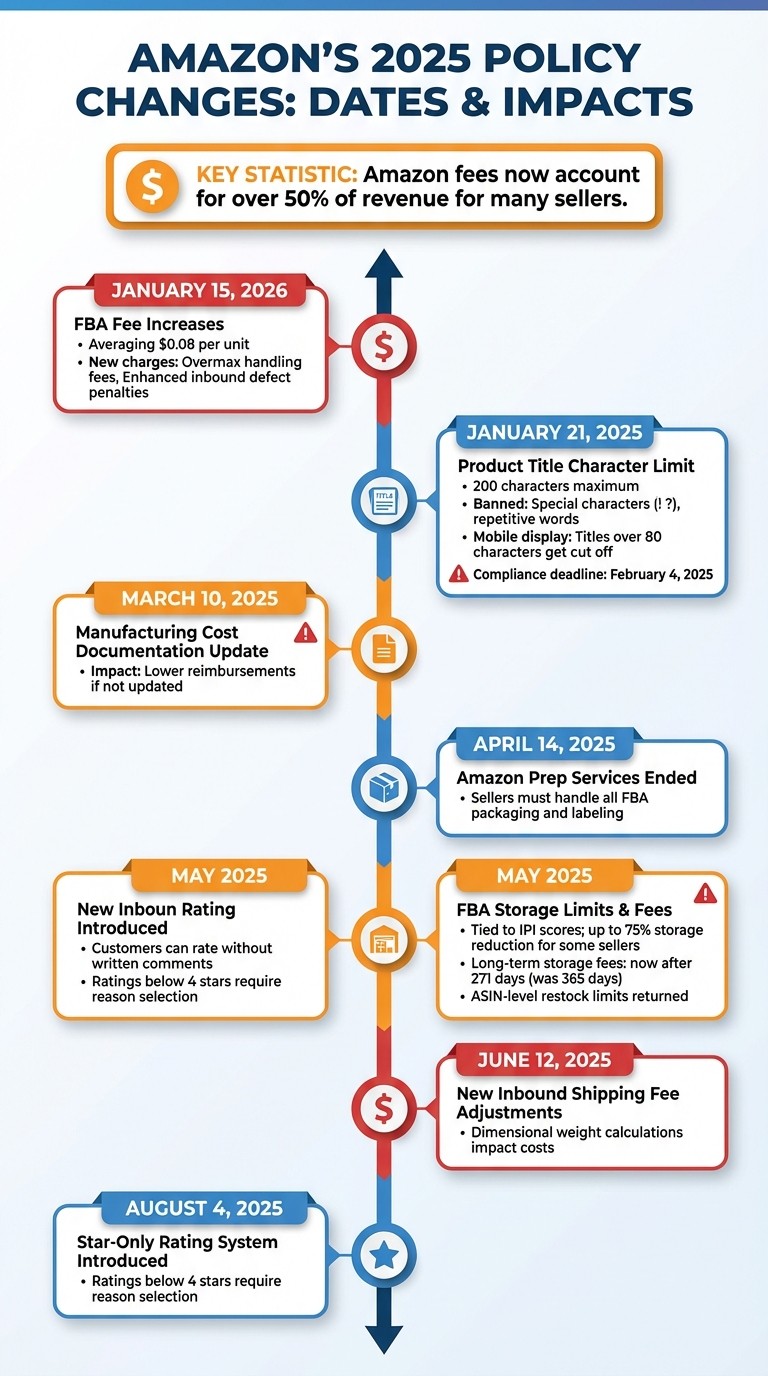
Product Titles: A strict 200-character limit is in place, banning special characters and repetitive words. Titles exceeding 80 characters may get cut off on mobile.
FBA Storage: Storage limits now depend on your Inventory Performance Index (IPI) score. Long-term storage fees apply after 271 days (down from 365).
Prep Services Ended: Amazon no longer provides item preparation for FBA shipments. Sellers must handle packaging and labeling themselves or use third-party services.
Manufacturing Costs: By March 10, 2025, sellers must update manufacturing cost documentation to avoid lower reimbursements.
Star-Only Ratings: Introduced on August 4, 2025, this system increases feedback volume but excludes written comments.
Key Takeaways:
Monitor compliance daily using Amazon's tools like the Account Health Dashboard.
Optimize product titles for clarity and mobile shoppers.
Plan inventory carefully to maintain a strong IPI score.
Ensure packaging meets Amazon's updated requirements to avoid penalties.
Track financial impacts like storage fees and shipping adjustments to protect profits.
Staying informed and acting quickly on these updates is essential to maintaining your account health and profitability on Amazon.
Amazon 2025 Policy Changes Timeline for Sellers
Amazon's New Rules for 2025: What Sellers Must Know NOW!
Major Amazon Policy Changes in 2025
The 2025 updates highlight the ever-changing landscape sellers must navigate, requiring them to stay alert and adapt quickly.
Amazon rolled out several key policy changes in 2025, each with a direct impact on sellers' day-to-day operations. These updates require immediate attention to avoid disruptions.
Product Title Character Limits
Starting January 21, 2025, Amazon implemented a strict 200-character cap for product titles. The new rules also ban the use of special characters like exclamation points (!) and question marks (?), while prohibiting repetitive words. Sellers were given until February 4, 2025, to adjust their listings; after this deadline, Amazon began automatically revising non-compliant titles based on its own recommendations. For mobile shoppers, product titles exceeding 80 characters will be cut off, so it's essential to place the most important details at the beginning.
These changes extend beyond just listings, as Amazon has also revised its inventory management policies.
Updated FBA Inventory Storage Limits
In May 2025, Amazon tied storage capacity to sellers' Inventory Performance Index (IPI) scores. Some sellers faced up to a 75% reduction in storage space, along with the return of ASIN-level restock limits. This performance-based system rewards efficient inventory management - slow-moving products reduce your available capacity, and hitting your limit means Amazon will stop accepting new shipments. This could result in stockouts for popular items. To add to the pressure, long-term storage fees now kick in after 271 days instead of the previous 365, pushing sellers to clear out inventory faster.
End of Amazon Prep Services
On April 14, 2025, Amazon officially ended its item preparation and packaging services for FBA shipments. Sellers are now fully responsible for ensuring their products meet all packaging, labeling, and safety requirements before sending them to Amazon's fulfillment centers. Noncompliance can result in higher fees or even inventory disposal. As a result, sellers must either handle preparation themselves or work with third-party services to stay compliant.
How to Interpret Policy Updates
To make sense of policy updates, focus on translating them into actionable steps and assessing their financial implications. This approach ensures you're not just following rules but strategically adapting to changes.
Identifying Compliance Gaps
Start by reviewing your listings to ensure they meet the latest requirements. Amazon’s Account Health Dashboard in Seller Central is a helpful tool for tracking compliance in real time. It can alert you to potential problems before they escalate. Additionally, using compliance tools to organize necessary documentation can save time and reduce errors.
Assign someone on your team to monitor policy updates regularly and conduct weekly reviews of your listings. Keeping detailed and organized records - like compliance documents, product specs, and listing details - makes it easier to identify and address discrepancies quickly.
Remember, Amazon’s automated systems are designed to detect and flag potential violations. Tackling these issues early can help avoid account suspensions and lost sales. Once you've identified gaps, assess how they could financially impact your business.
Calculating Business Impact
Policy updates often come with financial consequences. For example, by March 10, 2025, you’ll need to update your manufacturing cost documentation in Seller Central through the "Manage Your Manufacturing Cost" page. Failing to do so could result in lower reimbursements for lost or damaged inventory.
Also, consider how changes like earlier long-term storage fees or revised inbound shipping measures affect your cash flow. Pay close attention to the new inbound shipping fee adjustments starting June 12, 2025. Miscalculations in shipment dimensions could lead to unexpected fees. A smart move? Optimize your packaging to reduce dimensional weight and keep costs in check.
Amazon’s fees now account for over 50% of revenue for many sellers. To stay profitable, conduct a thorough pricing analysis that includes all updated fees, such as the new 10% baseline tariff on many imported products. Accurate forecasting is essential to navigating these changes without compromising your margins.
When financial risks become too complex to manage alone, it’s wise to bring in professional support.
Getting Professional Help
Expert advice can be a game-changer. Companies like eStore Factory specialize in account management and compliance, helping sellers adapt to Amazon’s evolving policies without disrupting operations. Their team stays updated on the latest requirements and can proactively identify risks.
For more complex issues like intellectual property disputes, brand protection, or arbitration cases, consider seeking attorney-reviewed guidance. Legal fees for trademark-related work typically range from $950 to $1,250, plus a government filing fee of about $350. If policy violations persist despite submitting the required documentation, professional intervention can help resolve these problems before they escalate into blocked listings or account suspensions.
"This blog is written for Amazon, Walmart, Etsy, eBay, and TikTok Shop sellers who need clear, attorney-reviewed guidance on account suspensions, policy updates, intellectual property disputes, brand protection, and arbitration." - AMZ Sellers Attorney®
How to Adapt to New Amazon Policies
Once you've identified compliance gaps and assessed the financial impact of Amazon's policy changes, it's time to act. Focus on the areas that directly influence compliance and profitability, and tackle them systematically.
Writing Compliant Product Titles
Amazon's updated character limits mean it's time to rethink how you craft product titles. Start with your brand name, followed by the product name and key details like color, size, or model number. Stick to Title Case and avoid unnecessary symbols or marketing fluff.
For example, instead of writing "PREMIUM Ultra-Soft Organic Cotton Bedsheets - LUXURY King Size!!!", opt for something like "Acme Home Organic Cotton Bedsheets, King Size, White." Clear and concise titles not only comply with Amazon's guidelines but also improve search rankings. Non-compliant titles risk suppression, lower visibility, and even account warnings. Test your updated titles to ensure they meet Amazon's rules while still driving conversions.
Getting Full FBA Reimbursements
Amazon's reimbursement policy changes emphasize the importance of keeping detailed records. To simplify this process, you might consider using services like eStore Factory's FBA reimbursement services. These services can handle everything from identifying eligible claims to filing and following up with Amazon.
Make sure to file claims promptly and maintain thorough documentation for every shipment. This includes invoices, receipts, and inventory reports, which are crucial for ensuring you're reimbursed for any eligible losses.
Managing Inventory Effectively
Maintaining a strong Inventory Performance Index (IPI) score is key to effective inventory management. Plan your inventory based on demand to avoid stockouts or overstocking. Keep your cancellation rate below 2.5% to stay in good standing.
With FBA fee increases averaging $0.08 per unit starting January 15, 2026, every inventory decision impacts your profitability. Use Amazon's Profit Analytics tool to forecast how these changes will affect your cash flow. You might also explore offering FBA multi-unit fee discounts of 3% or more for Amazon Business orders. This can help reduce per-unit fulfillment fees and encourage bulk purchases. Now is the time to audit your cost structures to prepare for new charges like overmax handling fees, enhanced penalties for inbound defects, and region-specific AWD storage adjustments.
Meeting New Packaging Requirements
Amazon's revised inbound shipping fees make efficient packaging more important than ever. Optimizing packaging to reduce dimensional weight and minimize damage can save you money and protect your products during transit.
Review Amazon's prep guidelines for your product categories and ensure your suppliers or prep centers are fully compliant. If you're handling prep in-house, invest in the right materials and train your team to follow proper procedures. Smaller, more secure packaging not only cuts costs but also helps reduce returns caused by shipping damage.
Handling Customer Ratings
On August 4, 2025, Amazon introduced a star-only rating system, allowing customers to leave feedback without written comments. This change aims to increase the volume of ratings, and early results suggest it's working. Many of these ratings come from customers who had positive experiences but previously didn’t leave feedback, potentially boosting average seller ratings.
"Our preliminary tests show that this simpler process helps sellers collect more ratings faster. We also found in our tests that many of these star-only ratings come from customers who have had positive order experiences but previously did not provide written feedback, which in turn may lead to an increase in the average seller ratings for many selling partners." - News_Amazon
For ratings below four stars, customers must select a reason, which Amazon reviews for eligibility. Complaints about product dissatisfaction are automatically excluded. If you believe a rating violates Amazon's guidelines, use the "Report a violation" tool in Seller Central to request a review. To minimize negative feedback, ensure your product descriptions, photos, and condition guidelines are accurate. Regularly monitor ratings as part of your broader compliance efforts to stay ahead of potential issues.
Conclusion
Amazon's 2025 policy updates bring significant changes that sellers must address to safeguard their accounts and maintain profitability. From stricter product title character limits to FBA reimbursement adjustments and the introduction of the star-only rating system, these updates touch nearly every aspect of your operations. Ignoring them could jeopardize your business.
Adapting to these changes requires more than just awareness - it demands consistent action. Regularly review your listings, monitor your Inventory Performance Index (IPI) score, and keep thorough shipment records to ensure you’re eligible for reimbursements under the revised policies.
For many sellers, managing these updates alongside day-to-day operations can feel overwhelming. This is where professional support becomes invaluable. Services like eStore Factory provide end-to-end account management, from listing optimization and policy monitoring to handling reimbursements and resolving account health issues. Their experts stay updated on Amazon’s policies, conduct detailed compliance audits, and manage the documentation needed for verification requests - all so you can focus on growing your business.
Partnering with compliance professionals not only saves you time but also minimizes risks and ensures faster issue resolution. With stronger compliance practices, you enhance your Buy Box eligibility, paving the way for scaling your business - whether that means launching new products or expanding into additional markets. It’s a proactive approach that sets the stage for long-term success.
While Amazon’s policies will keep evolving, your strategy doesn’t have to be reactive. Stay informed, act decisively on updates, and leverage expert support to remain compliant and competitive. Thriving on Amazon in 2025 and beyond depends on staying ahead of the curve.
FAQs
How can I make sure my product titles meet Amazon's updated character limits?
To align with Amazon's updated title character limits starting January 21, 2025, here’s what you need to do:
Understand your category's limit: Most categories permit up to 200 characters (including spaces). However, stricter limits apply to certain categories, like Apparel, which is capped at 125-130 characters.
Keep titles straightforward: Focus on the essentials - brand, product name, key features, size, or color. Skip promotional phrases like "Best Price" or unnecessary adjectives that add clutter.
Avoid prohibited characters: Symbols such as
!,$, and?are not allowed unless they are part of a brand name.
If you need help managing bulk updates or want professional guidance, eStore Factory offers title optimization services. These services ensure your listings stay compliant while maintaining SEO performance, keeping your products visible in Amazon's U.S. marketplace.
How can I improve my Inventory Performance Index (IPI) score on Amazon?
To keep your IPI score in good shape, prioritize inventory health by keeping a close eye on key metrics. Clear out excess or slow-moving stock to cut down storage fees and avoid penalties for aged inventory. Address stranded inventory quickly so your products remain available for customers to buy. Match your restocking strategy with demand predictions to maintain strong sell-through rates and avoid overstocking. Staying on top of these steps can help you maintain a solid IPI score while boosting efficiency.
How will Amazon discontinuing its prep services impact my FBA shipments?
Starting January 1, 2026, Amazon will discontinue its optional prep and labeling services for FBA sellers. This shift means sellers will need to handle tasks like labeling, poly-bagging, applying suffocation-warning stickers, and other prep work themselves before shipping inventory to Amazon's fulfillment centers.
This adjustment could lead to added workload, higher costs, and potential delays if shipments don't meet compliance standards. To avoid these challenges, it's a good idea to train your team on FBA preparation guidelines or partner with professionals who specialize in these services to ensure smooth and compliant shipments.