

Back to Page
Advertising
Amazon sellers identified profitable PPC keywords by downloading search term reports, sorting by ACoS, and manually promoting “high-volume” terms. On paper, this felt logical. In reality, this method is now incomplete.
In 2026, Amazon moves faster than any human workflow. By the time a seller reviews a report, competitors have already adjusted bids and placements. This creates a data lag where decisions are made using yesterday’s signals, not today’s reality.
Manual management cannot stop budget loss: Keywords that do not convert can spend your entire daily budget in just a few hours. Since sellers are not monitoring ads all the time, this wasted spend often goes unnoticed until profits are already affected.
Inventory issues lead to wasted ad spend: When stock runs low or inbound inventory is delayed, sellers often forget to pause ads. This means paying for clicks on products that cannot be purchased.
Manual analysis shows only part of the picture: Most sellers look at clicks, orders, and ACoS. They miss bigger problems like listing suppressions, Buy Box loss, or inbound errors, which often cause keywords to fail.
This is where AI-driven automation like SellerQI changes the process. It is Amazon account monitoring software that monitors keyword performance alongside listing health, inventory status, and account-level issues in real time. So that sellers can identify truly profitable keywords without relying on outdated, incomplete signals.
How SellerQI helps you find profitable keywords
1. Spot keywords by first fixing high-ACoS campaigns
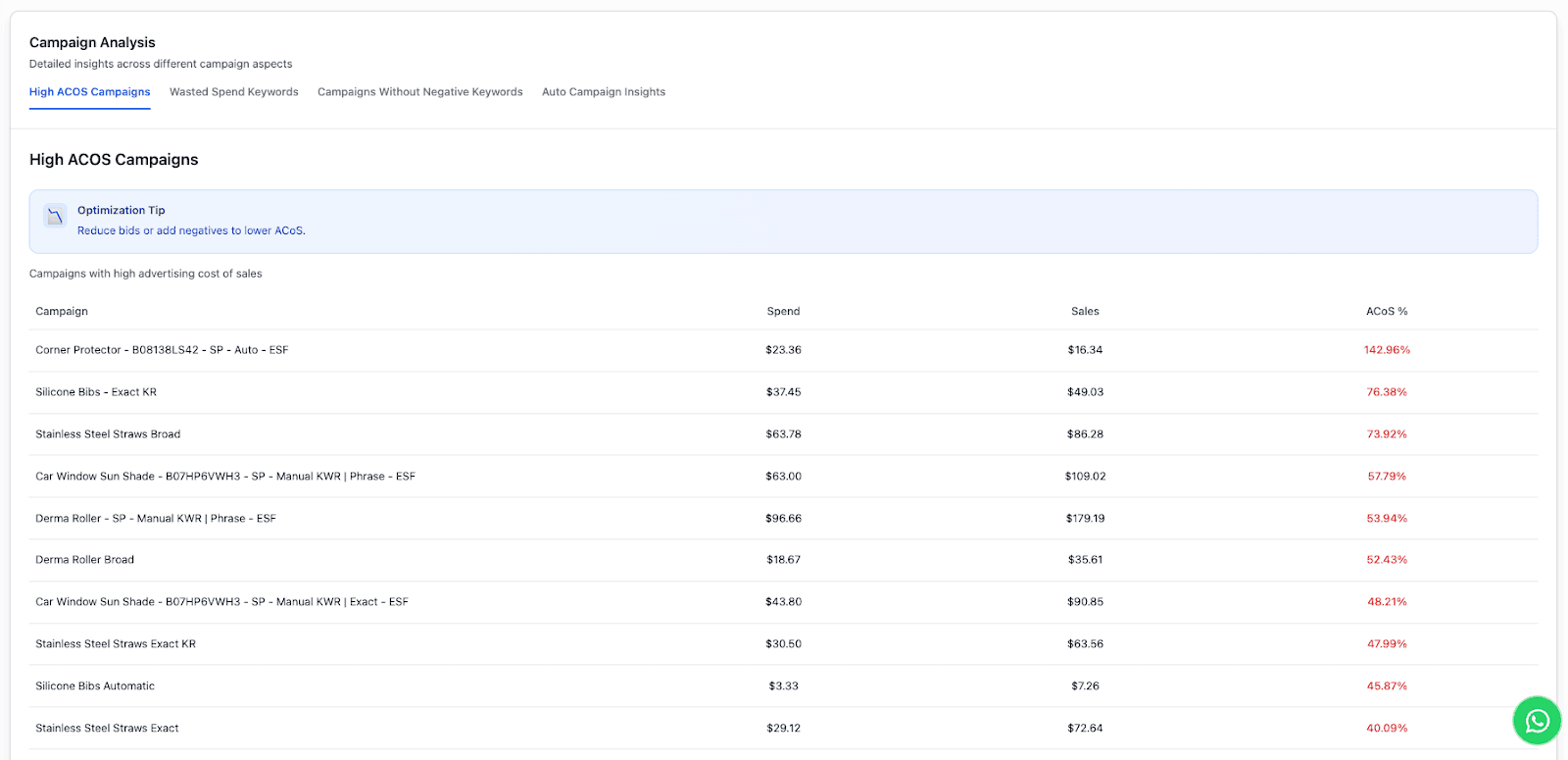
Profitable PPC keywords often hide inside campaigns that look unprofitable at first glance. SellerQI highlights campaigns with high spend, sales, and ACoS side by side, making it easy to see where revenue exists but efficiency is broken. Once waste is reduced, the keywords driving real sales become clear.
This can easily be understood by the practical example. SellerQI flagged a campaign spending $1,200 with $6,000 in sales but a high ACoS. It then reveals that a few keywords are wasting ad spend, while others are driving most of the revenue efficiently. Once the wasteful keywords are paused, the profitable ones become easy to identify and scale.
2. Eliminate wasted spend to reveal true keyword winners
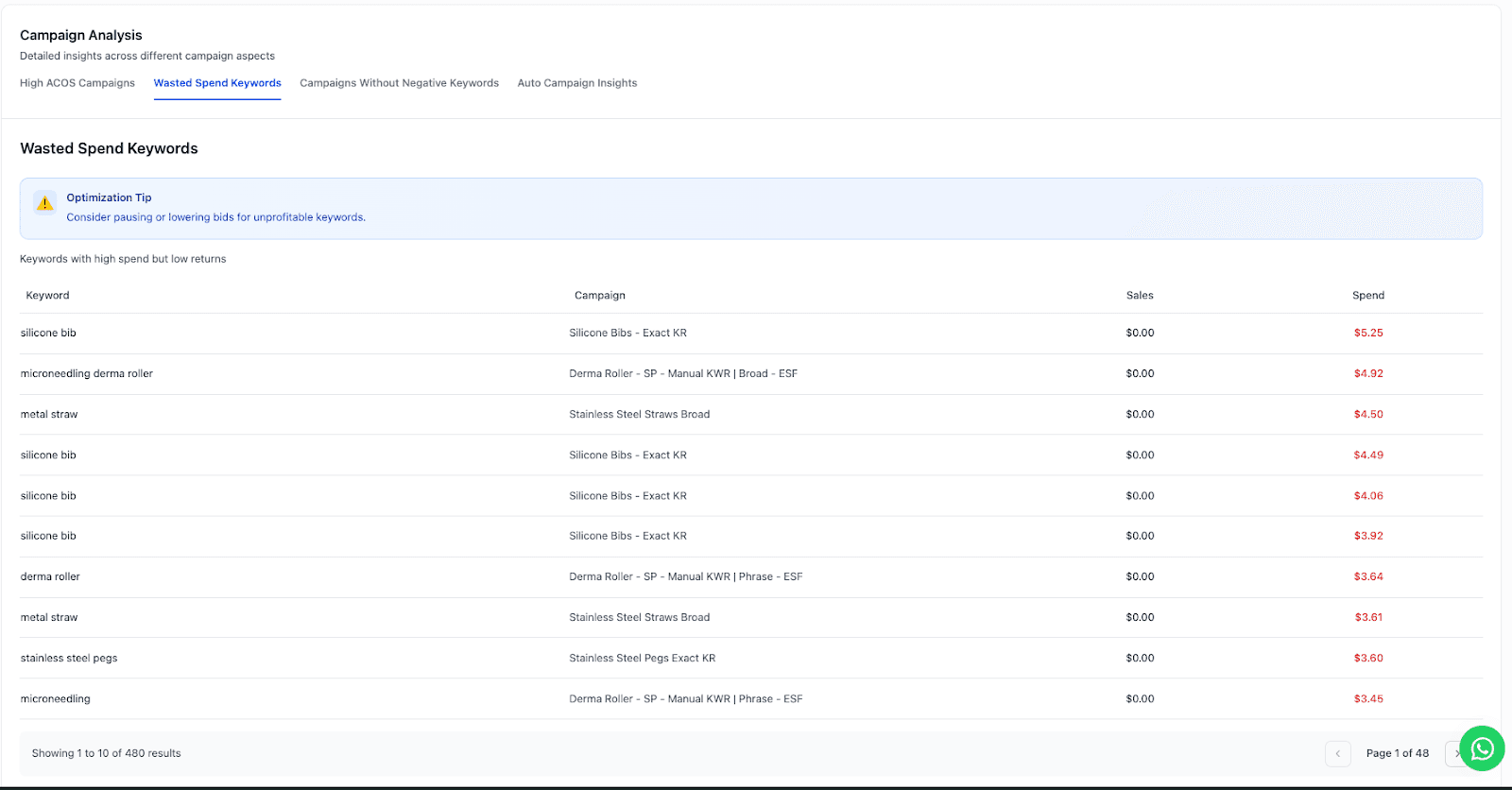
Some keywords spend heavily but fail to deliver results. SellerQI identifies these wasted spend keywords automatically, allowing sellers to remove noise and focus only on terms that bring consistent sales. When waste is removed, profitable keywords stand out naturally.
Let’s understand with an example. A keyword has spent $120 with no sales over the last week. Manually, it might go unnoticed among hundreds of terms. SellerQI flags it as wasted spend, helping the seller pause it quickly. After removing these draining keywords, the remaining ones show stronger conversion and clearer profit signals.
3. Use negative keyword gaps to protect profitable traffic
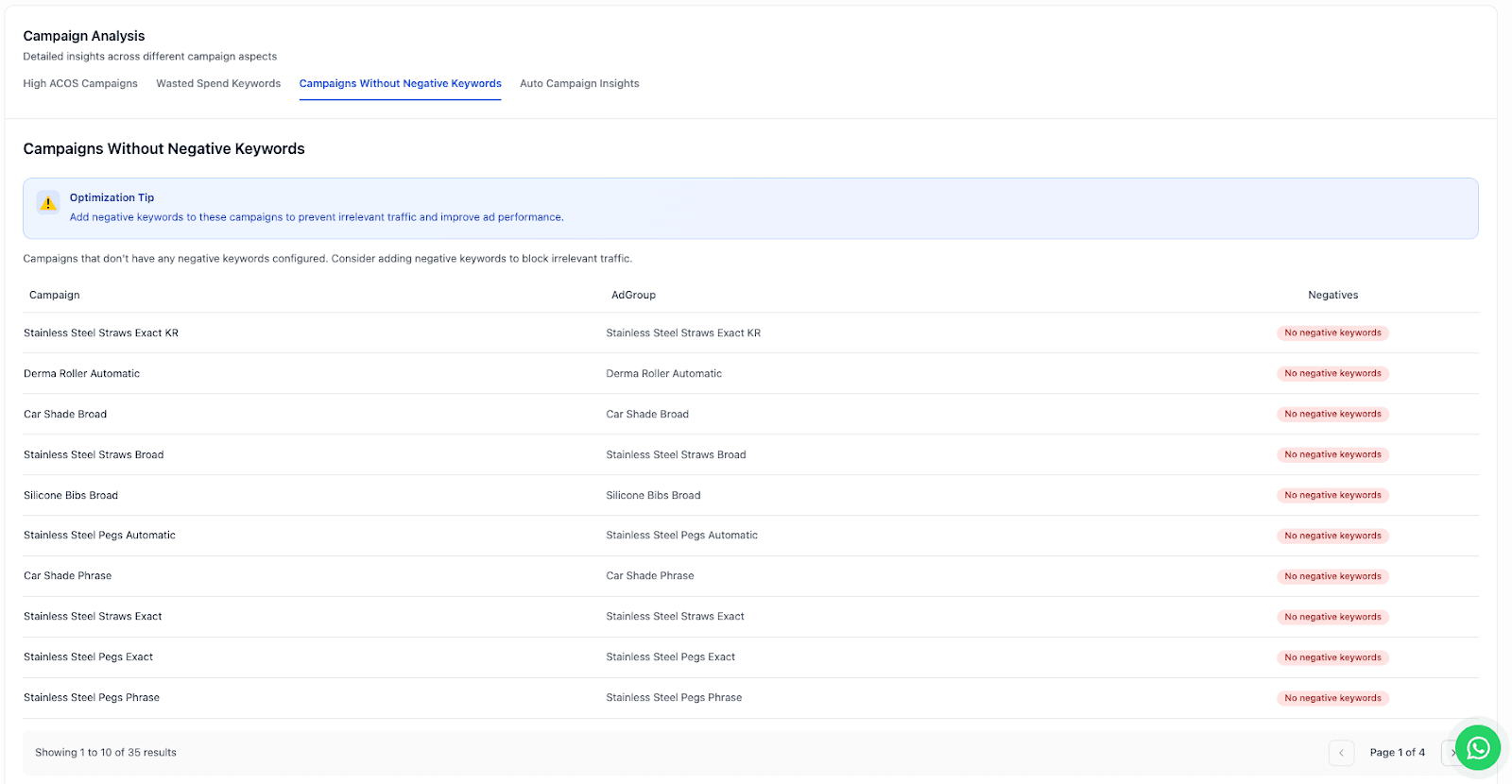
Campaigns without negative keywords often attract irrelevant searches that hurt performance. SellerQI flags these gaps, helping sellers block low-quality traffic. This improves conversion rates and makes profitable keywords easier to identify and scale.
This can be better understood with an example. A seller’s product is premium, but the campaign is attracting searches like “cheap” or “free.” SellerQI highlights campaigns with no negative keywords set. Once irrelevant terms are blocked, ad spend focuses on high-intent searches, improving conversion rates, and revealing which keywords truly perform.
4. Turn auto campaign data into proven keyword opportunities
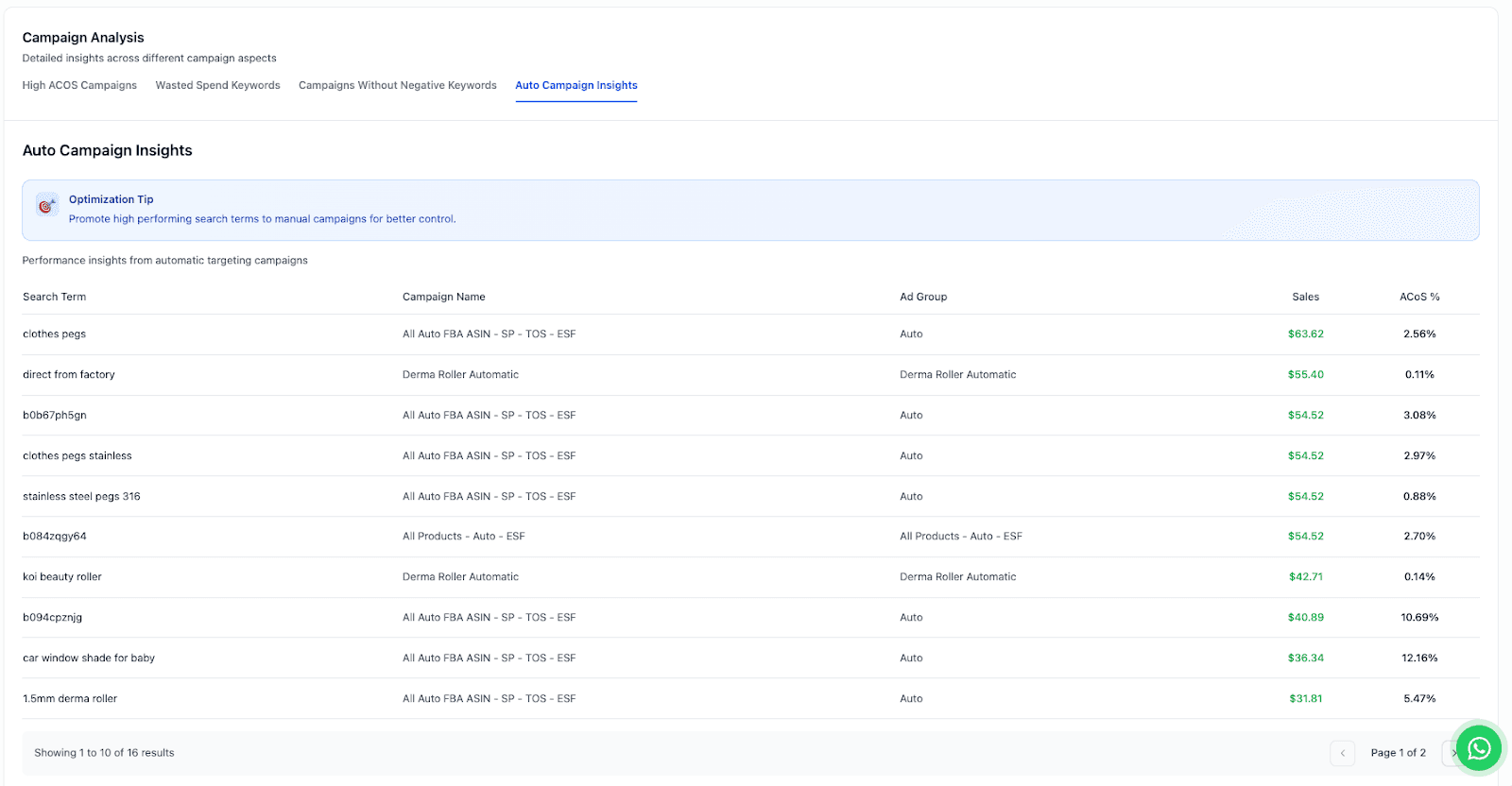
Auto campaigns contain valuable search term data, but it is often overlooked. SellerQI surfaces search terms from auto campaigns with clear sales and ACoS data at the ad group level. These insights help sellers confidently move proven terms into manual campaigns and scale what works.
Consider this example. An auto campaign quietly generates sales from a specific search term, but the seller never spots it in time. SellerQI surfaces this term with sales and ACoS data at the ad group level. The seller then moves it into a manual campaign and scales it confidently as a proven keyword.
So, SellerQI is your ultimate Amazon PPC audit tool that identifies PPC keywords by removing waste, protecting high-intent traffic, and promoting proven search terms. SellerQI helps make this process clear and actionable, even in complex Amazon accounts.



eStore Factory is a full-service Amazon agency dedicated to building end-to-end strategies for brands of all sizes.


SERVICES FOR AMAZON
Product Setup ON AMAZON
GRAPHICS & BRANDING SERVICES
© Copyright 2014 - 2024. All Rights Reserved.