

Back to Page
Amazon Seller Guide
Amazon Global Selling guide 2026: Expand to the UK, and Europe
Amazon Global Selling guide 2026: Expand to the UK, and Europe

Back to Page
Amazon Seller Guide
Amazon Global Selling guide 2026: Expand to the UK, and Europe
TL;DR
Amazon Global Selling allows US sellers to expand into international marketplaces like the UK, Germany, France, Spain, and Italy using a unified Seller Central account, making global expansion easier than before.
The UK is often the first market for US sellers because it uses English, has strong Amazon demand (over $40B annually), and offers a familiar selling environment.
To start selling internationally, sellers need to link or create marketplace accounts, set up payment methods for foreign currencies, and create or sync listings using tools like Build International Listings.
VAT registration is a key requirement when selling in the UK or storing inventory in Europe, and sellers must understand local tax rules, filing obligations, and marketplace regulations.
Amazon provides multiple fulfillment options for Europe, including the European Fulfilment Network (EFN), Pan-European FBA, and Multi-Country Inventory, each with different operational and tax implications.
International expansion requires planning around compliance, taxes, fulfillment, and localized listings, but with the right setup, even small and mid-sized sellers can successfully grow revenue across global Amazon marketplaces.
While you've been selling in the US, your competitors have been quietly building revenue in the UK, Germany, France, and other European markets.
The global e-commerce market is projected to hit $7.9 trillion by 2027, according to Statista, 2024. Amazon operates in 21 countries, giving you an infrastructure to reach those shoppers. The UK alone generates over $40 billion in annual Amazon sales. The EU is home to 450 million potential customers.
Amazon Global Selling is no longer a luxury reserved for large sellers. Today, even small and mid-sized US sellers can list products in the UK, Germany, France, Spain, Italy, and more, often without leaving Seller Central.
In this guide, you will learn exactly how to start selling internationally and cover VAT requirements, fulfillment options, and seller account setup. Whether you are brand new to Amazon or already established in the US, this guide gives you a clear path for doing cross-border e-commerce.
How to start selling on Amazon internationally?
The fastest way to start is through Amazon Global Selling. It is Amazon's program that lets you list and sell products across 21+ international Amazon marketplaces from a single Seller Central dashboard. Before jumping in, you need to understand how Amazon structures international accounts. This determines how much setup work you'll need to do.
Amazon's unified account structure
Account Type | Countries Covered | What It Means for You |
North America Unified | US, Canada, Mexico, Brazil | You already have this if you sell on Amazon.com |
Europe Unified | UK, Germany, France, Italy, Spain, Netherlands, Sweden, Poland, Belgium | One registration, sell across all 9 countries |
Separate Account Required | Australia, Japan, Singapore, UAE, Saudi Arabia | Must register individually for each country |
Here is how to get started in 4 clear steps:
Log in to your US Seller Central account at sellercentral.amazon.com.
Navigate to Inventory > Sell Globally. This shows all available international marketplaces.
Select the marketplace you want to enter (e.g., Amazon.co.uk for the UK, Amazon.com.au for Australia, Amazon.de for Germany).
Link or create a new seller account for that marketplace. Some regions allow you to use your existing account under a unified global account.
You will need a local bank account or a multi-currency payment provider to receive payments in foreign currencies. Amazon also offers its own Amazon Currency Converter for Sellers (ACCS), which deposits proceeds directly to your US bank account.
Once your account is set up, you can list products manually, use Build International Listings (BIL) to sync your US listings automatically, or create new listings tailored to each market.
How to sell on Amazon UK from the USA
The UK is one of the most attractive destinations for US sellers looking to expand internationally. English is the language, the market is mature, and Amazon UK is one of the top 3 Amazon marketplaces globally by revenue.
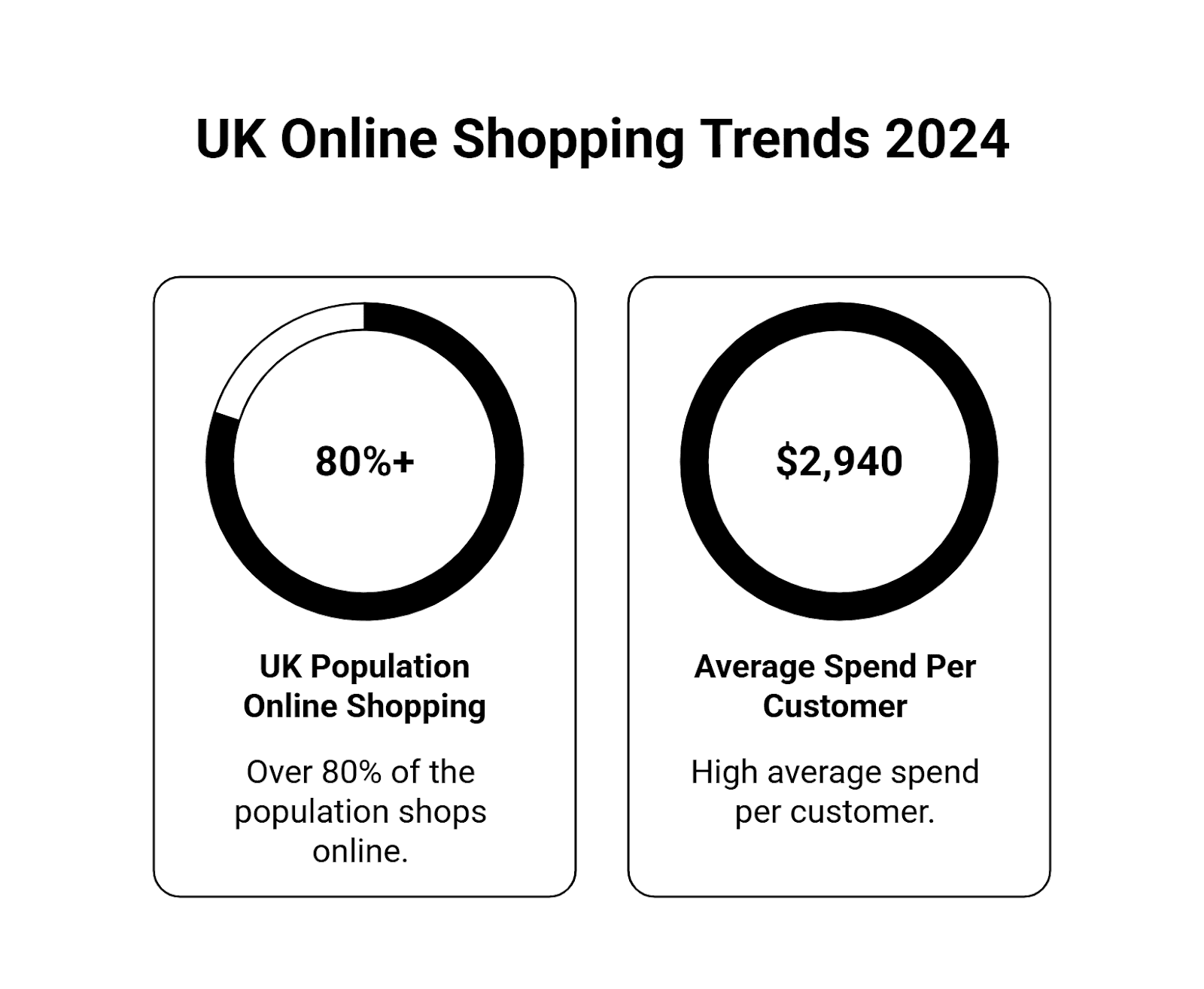
Source: Amazon
Step 1: Create or link your Amazon UK seller account
Go to sellercentral.amazon.co.uk and register. If you already have a North America Unified Account, Amazon may allow you to extend access to the UK marketplace without a separate registration. You will need your business name, address, bank account details, and government-issued ID.
Step 2: Check product compliance and labelling requirements
Products sold in the UK must comply with UK regulations post-Brexit. This means CE marking may need to be replaced with the UKCA mark for certain product categories (electronics, toys, personal protective equipment, etc.). Check the UK government's official guidance for your specific product type. Labels must also be in English, with UK-compliant sizing metric units required for most goods.
Step 3: Choose your fulfilment method
You have two main choices: send inventory to Amazon's UK fulfillment centres and use FBA (Fulfilled by Amazon), or fulfill orders yourself from the US using FBM (Fulfilled by Merchant). FBA is strongly recommended for Prime eligibility and faster delivery. To use FBA UK, you will need to ship goods to the UK, either directly from your supplier or from your US warehouse via a freight forwarder.
Step 4: Create your UK listings
Use Build International Listings (BIL) to automatically copy your US listings to the UK marketplace, adjusting prices by a fixed percentage or a flat amount. Review each listing to ensure pricing makes sense in GBP and that your product descriptions reflect UK English (e.g., "colour" not "color", "aluminium" not "aluminum").
Do I need a VAT number to sell on Amazon UK?
Yes. You will need a UK VAT (Value Added Tax) number. This is one of the most important compliance steps for US sellers entering the UK market.
You store inventory in the UK (using FBA UK), registration is required from day one, regardless of sales volume.
Your UK sales exceed £90,000 in a rolling 12-month period (the UK VAT registration threshold as of 2024).
You sell goods to UK customers from outside the UK, and your goods exceed the £135 import threshold per consignment.
How to register for UK VAT as a US seller?
Registering online via HMRC's website (hmrc.gov.uk), is free and typically takes 2 to 4 weeks.
You will receive a VAT registration number. Add this to your Amazon Seller Central account under Tax Settings.
File quarterly VAT returns, reporting the VAT you have collected and paying the difference to HMRC.
UK VAT is currently 20% for most goods. Amazon will collect VAT on sales for items priced below £135 since the UK's marketplace facilitator rules came into effect, but for FBA sellers, you are still responsible for registering and accounting for VAT properly.
How do I expand my Amazon business to Europe?
Europe is Amazon's second-largest market. The five main European Amazon marketplaces are Germany (amazon.de), theUK (amazon.co.uk), France (amazon.fr), Italy (amazon.it), and Spain (amazon.es). You access all of these through a single European Seller Account.
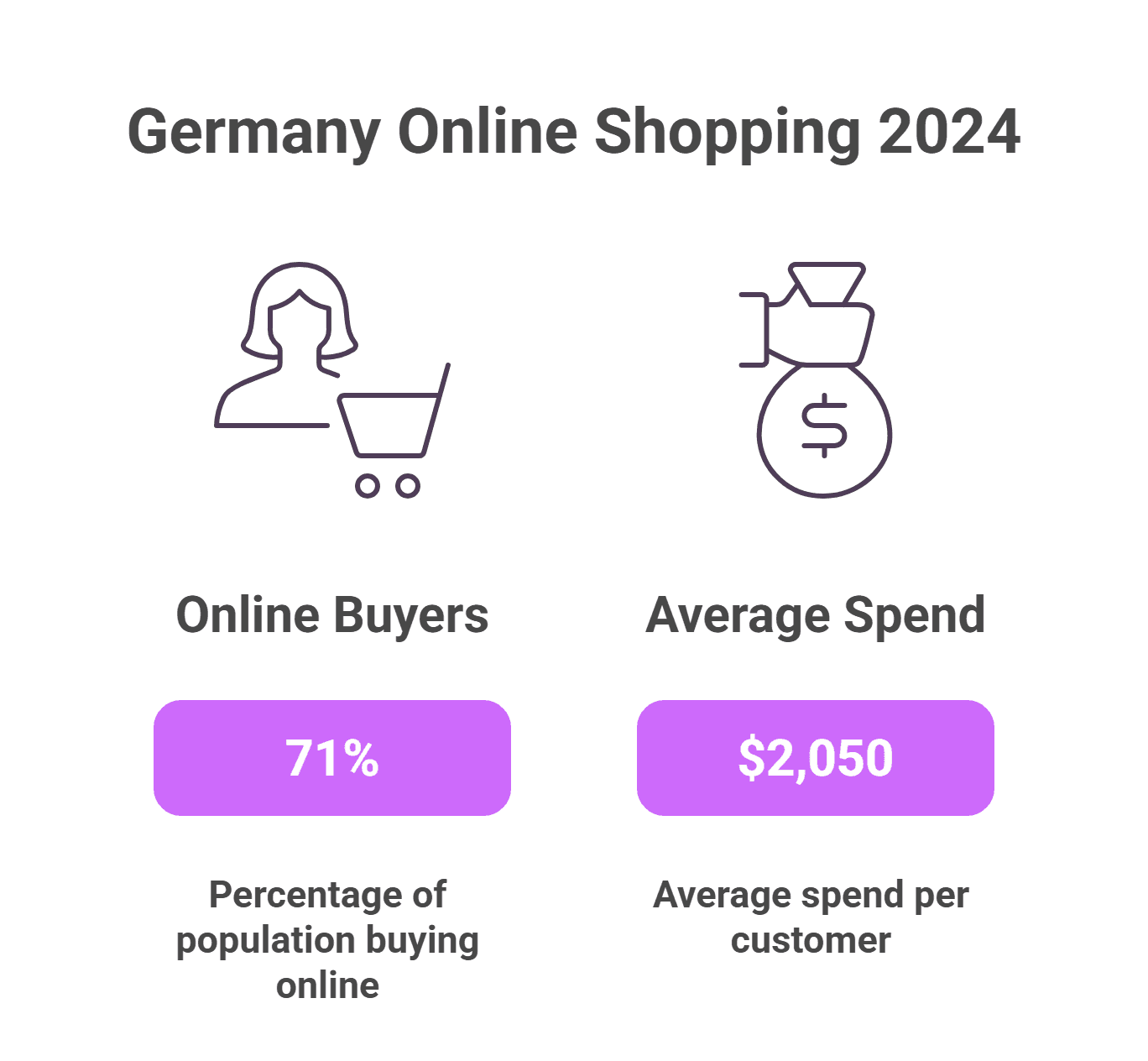
Source: Amazon
Amazon offers three fulfilment programmes for European expansion:
#1 European Fulfilment Network (EFN)
Store your inventory in one EU country (e.g., Germany) and Amazon ships pan-European orders from that single location. This is the easiest starting point, which is low complexity, one inventory pool. The downside is slightly longer cross-border delivery times and higher EFN fees for orders shipped across countries.
#2 Pan-European FBA (Pan-EU FBA)
Amazon automatically distributes your inventory across fulfilment centres in multiple EU countries based on demand. This gives customers faster local delivery and lower fulfilment fees. But it triggers VAT obligations in every country where inventory is stored, typically 5 to 7 countries. This programme is powerful once you are VAT-compliant across those markets.
#3 Multi-Country Inventory (MCI)
You manually send inventory to specific country fulfilment centres. You control exactly where your stock goes, giving you more control over VAT exposure. This is a good option for sellers who want to test two or three markets before going fully pan-European.
VAT registration for Amazon Europe
VAT registration for Amazon Europe is the piece that trips up most US sellers, but it does not have to be complicated once you understand the rules. Key EU VAT rules you must know:
If you store inventory in an EU country via FBA, you must be VAT-registered in that country before shipping goods there.
If your total sales to EU consumers exceed €10,000 per year across all EU countries, you must register for the EU's One Stop Shop (OSS) scheme or register in each individual country where customers are based.
The OSS scheme (introduced July 2021) lets you file a single quarterly VAT return covering all EU B2C sales, a major simplification.
Standard VAT rates vary by country: Germany 19%, France 20%, Spain 21%, and Italy 22%.
VAT registration checklist for US sellers
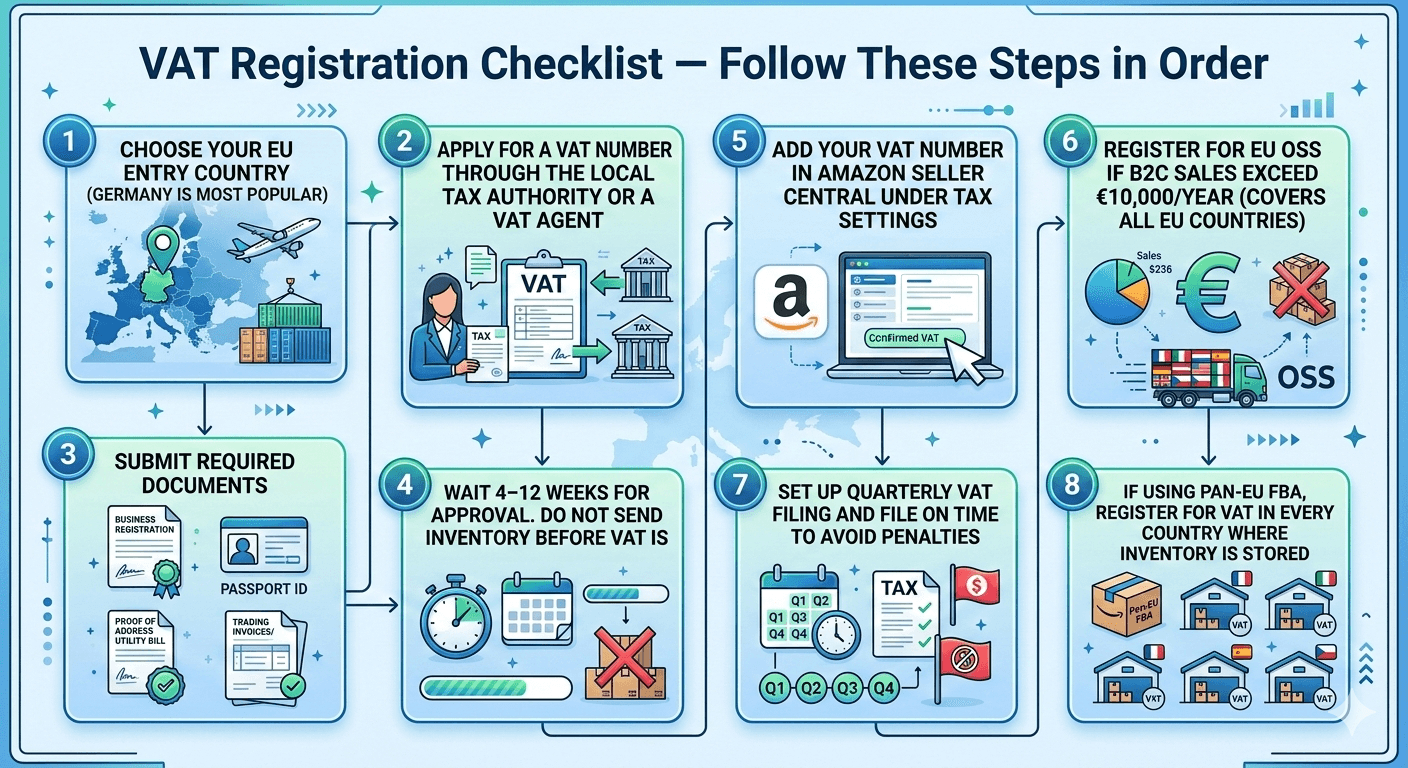
Pro tip: Many US sellers use a VAT compliance service (such as Taxually, Avalara, or a local EU accountant) to handle filings. The cost is typically $50 to $150/month per country and is well worth it to avoid errors and penalties.
Ready to take your Amazon business global?
International expansion on Amazon is not as complicated as it looks. Millions of dollars in international sales start with the same first step: setting up your international seller account. From there, you work through compliance, fulfillment, and VAT, one market at a time.
Amazon Global Selling is real, growing, and accessible. The sellers who start now will have a significant head start over those who wait. Our team at eStore Factory specializes in helping US sellers navigate international expansion from Amazon account setup and compliance to VAT registration and listing optimization.
Reach out today for a free strategy consultation and let us help you start earning in new markets.
FAQs
Do I need a separate Amazon seller account for each country?
No. One account covers entire regions like North America (US, Canada, Mexico) and Europe (UK, Germany, France, Spain, Italy), and each using a single unified account. You only need a separate account for standalone marketplaces like Australia, Japan, or India.
Can I use my US Amazon inventory to sell in Europe?
Yes, through Amazon's European Fulfilment Network (EFN), your US inventory ships to EU customers on demand. For faster delivery and lower fees, you will eventually want stock stored inside EU fulfillment centres.
How do I translate my Amazon listings for European marketplaces?
Use Amazon's Build International Listings (BIL) tool for a quick auto-translation, but always get a professional human translator to review it. Poor translations directly kill conversion rates, especially in Germany, France, and Italy.
TL;DR
Amazon Global Selling allows US sellers to expand into international marketplaces like the UK, Germany, France, Spain, and Italy using a unified Seller Central account, making global expansion easier than before.
The UK is often the first market for US sellers because it uses English, has strong Amazon demand (over $40B annually), and offers a familiar selling environment.
To start selling internationally, sellers need to link or create marketplace accounts, set up payment methods for foreign currencies, and create or sync listings using tools like Build International Listings.
VAT registration is a key requirement when selling in the UK or storing inventory in Europe, and sellers must understand local tax rules, filing obligations, and marketplace regulations.
Amazon provides multiple fulfillment options for Europe, including the European Fulfilment Network (EFN), Pan-European FBA, and Multi-Country Inventory, each with different operational and tax implications.
International expansion requires planning around compliance, taxes, fulfillment, and localized listings, but with the right setup, even small and mid-sized sellers can successfully grow revenue across global Amazon marketplaces.
While you've been selling in the US, your competitors have been quietly building revenue in the UK, Germany, France, and other European markets.
The global e-commerce market is projected to hit $7.9 trillion by 2027, according to Statista, 2024. Amazon operates in 21 countries, giving you an infrastructure to reach those shoppers. The UK alone generates over $40 billion in annual Amazon sales. The EU is home to 450 million potential customers.
Amazon Global Selling is no longer a luxury reserved for large sellers. Today, even small and mid-sized US sellers can list products in the UK, Germany, France, Spain, Italy, and more, often without leaving Seller Central.
In this guide, you will learn exactly how to start selling internationally and cover VAT requirements, fulfillment options, and seller account setup. Whether you are brand new to Amazon or already established in the US, this guide gives you a clear path for doing cross-border e-commerce.
How to start selling on Amazon internationally?
The fastest way to start is through Amazon Global Selling. It is Amazon's program that lets you list and sell products across 21+ international Amazon marketplaces from a single Seller Central dashboard. Before jumping in, you need to understand how Amazon structures international accounts. This determines how much setup work you'll need to do.
Amazon's unified account structure
Account Type | Countries Covered | What It Means for You |
North America Unified | US, Canada, Mexico, Brazil | You already have this if you sell on Amazon.com |
Europe Unified | UK, Germany, France, Italy, Spain, Netherlands, Sweden, Poland, Belgium | One registration, sell across all 9 countries |
Separate Account Required | Australia, Japan, Singapore, UAE, Saudi Arabia | Must register individually for each country |
Here is how to get started in 4 clear steps:
Log in to your US Seller Central account at sellercentral.amazon.com.
Navigate to Inventory > Sell Globally. This shows all available international marketplaces.
Select the marketplace you want to enter (e.g., Amazon.co.uk for the UK, Amazon.com.au for Australia, Amazon.de for Germany).
Link or create a new seller account for that marketplace. Some regions allow you to use your existing account under a unified global account.
You will need a local bank account or a multi-currency payment provider to receive payments in foreign currencies. Amazon also offers its own Amazon Currency Converter for Sellers (ACCS), which deposits proceeds directly to your US bank account.
Once your account is set up, you can list products manually, use Build International Listings (BIL) to sync your US listings automatically, or create new listings tailored to each market.
How to sell on Amazon UK from the USA
The UK is one of the most attractive destinations for US sellers looking to expand internationally. English is the language, the market is mature, and Amazon UK is one of the top 3 Amazon marketplaces globally by revenue.
Source: Amazon
Step 1: Create or link your Amazon UK seller account
Go to sellercentral.amazon.co.uk and register. If you already have a North America Unified Account, Amazon may allow you to extend access to the UK marketplace without a separate registration. You will need your business name, address, bank account details, and government-issued ID.
Step 2: Check product compliance and labelling requirements
Products sold in the UK must comply with UK regulations post-Brexit. This means CE marking may need to be replaced with the UKCA mark for certain product categories (electronics, toys, personal protective equipment, etc.). Check the UK government's official guidance for your specific product type. Labels must also be in English, with UK-compliant sizing metric units required for most goods.
Step 3: Choose your fulfilment method
You have two main choices: send inventory to Amazon's UK fulfillment centres and use FBA (Fulfilled by Amazon), or fulfill orders yourself from the US using FBM (Fulfilled by Merchant). FBA is strongly recommended for Prime eligibility and faster delivery. To use FBA UK, you will need to ship goods to the UK, either directly from your supplier or from your US warehouse via a freight forwarder.
Step 4: Create your UK listings
Use Build International Listings (BIL) to automatically copy your US listings to the UK marketplace, adjusting prices by a fixed percentage or a flat amount. Review each listing to ensure pricing makes sense in GBP and that your product descriptions reflect UK English (e.g., "colour" not "color", "aluminium" not "aluminum").
Do I need a VAT number to sell on Amazon UK?
Yes. You will need a UK VAT (Value Added Tax) number. This is one of the most important compliance steps for US sellers entering the UK market.
You store inventory in the UK (using FBA UK), registration is required from day one, regardless of sales volume.
Your UK sales exceed £90,000 in a rolling 12-month period (the UK VAT registration threshold as of 2024).
You sell goods to UK customers from outside the UK, and your goods exceed the £135 import threshold per consignment.
How to register for UK VAT as a US seller?
Registering online via HMRC's website (hmrc.gov.uk), is free and typically takes 2 to 4 weeks.
You will receive a VAT registration number. Add this to your Amazon Seller Central account under Tax Settings.
File quarterly VAT returns, reporting the VAT you have collected and paying the difference to HMRC.
UK VAT is currently 20% for most goods. Amazon will collect VAT on sales for items priced below £135 since the UK's marketplace facilitator rules came into effect, but for FBA sellers, you are still responsible for registering and accounting for VAT properly.
How do I expand my Amazon business to Europe?
Europe is Amazon's second-largest market. The five main European Amazon marketplaces are Germany (amazon.de), theUK (amazon.co.uk), France (amazon.fr), Italy (amazon.it), and Spain (amazon.es). You access all of these through a single European Seller Account.
Source: Amazon
Amazon offers three fulfilment programmes for European expansion:
#1 European Fulfilment Network (EFN)
Store your inventory in one EU country (e.g., Germany) and Amazon ships pan-European orders from that single location. This is the easiest starting point, which is low complexity, one inventory pool. The downside is slightly longer cross-border delivery times and higher EFN fees for orders shipped across countries.
#2 Pan-European FBA (Pan-EU FBA)
Amazon automatically distributes your inventory across fulfilment centres in multiple EU countries based on demand. This gives customers faster local delivery and lower fulfilment fees. But it triggers VAT obligations in every country where inventory is stored, typically 5 to 7 countries. This programme is powerful once you are VAT-compliant across those markets.
#3 Multi-Country Inventory (MCI)
You manually send inventory to specific country fulfilment centres. You control exactly where your stock goes, giving you more control over VAT exposure. This is a good option for sellers who want to test two or three markets before going fully pan-European.
VAT registration for Amazon Europe
VAT registration for Amazon Europe is the piece that trips up most US sellers, but it does not have to be complicated once you understand the rules. Key EU VAT rules you must know:
If you store inventory in an EU country via FBA, you must be VAT-registered in that country before shipping goods there.
If your total sales to EU consumers exceed €10,000 per year across all EU countries, you must register for the EU's One Stop Shop (OSS) scheme or register in each individual country where customers are based.
The OSS scheme (introduced July 2021) lets you file a single quarterly VAT return covering all EU B2C sales, a major simplification.
Standard VAT rates vary by country: Germany 19%, France 20%, Spain 21%, and Italy 22%.
VAT registration checklist for US sellers
Pro tip: Many US sellers use a VAT compliance service (such as Taxually, Avalara, or a local EU accountant) to handle filings. The cost is typically $50 to $150/month per country and is well worth it to avoid errors and penalties.
Ready to take your Amazon business global?
International expansion on Amazon is not as complicated as it looks. Millions of dollars in international sales start with the same first step: setting up your international seller account. From there, you work through compliance, fulfillment, and VAT, one market at a time.
Amazon Global Selling is real, growing, and accessible. The sellers who start now will have a significant head start over those who wait. Our team at eStore Factory specializes in helping US sellers navigate international expansion from Amazon account setup and compliance to VAT registration and listing optimization.
Reach out today for a free strategy consultation and let us help you start earning in new markets.
FAQs
Do I need a separate Amazon seller account for each country?
No. One account covers entire regions like North America (US, Canada, Mexico) and Europe (UK, Germany, France, Spain, Italy), and each using a single unified account. You only need a separate account for standalone marketplaces like Australia, Japan, or India.
Can I use my US Amazon inventory to sell in Europe?
Yes, through Amazon's European Fulfilment Network (EFN), your US inventory ships to EU customers on demand. For faster delivery and lower fees, you will eventually want stock stored inside EU fulfillment centres.
How do I translate my Amazon listings for European marketplaces?
Use Amazon's Build International Listings (BIL) tool for a quick auto-translation, but always get a professional human translator to review it. Poor translations directly kill conversion rates, especially in Germany, France, and Italy.
TL;DR
Amazon Global Selling allows US sellers to expand into international marketplaces like the UK, Germany, France, Spain, and Italy using a unified Seller Central account, making global expansion easier than before.
The UK is often the first market for US sellers because it uses English, has strong Amazon demand (over $40B annually), and offers a familiar selling environment.
To start selling internationally, sellers need to link or create marketplace accounts, set up payment methods for foreign currencies, and create or sync listings using tools like Build International Listings.
VAT registration is a key requirement when selling in the UK or storing inventory in Europe, and sellers must understand local tax rules, filing obligations, and marketplace regulations.
Amazon provides multiple fulfillment options for Europe, including the European Fulfilment Network (EFN), Pan-European FBA, and Multi-Country Inventory, each with different operational and tax implications.
International expansion requires planning around compliance, taxes, fulfillment, and localized listings, but with the right setup, even small and mid-sized sellers can successfully grow revenue across global Amazon marketplaces.
While you've been selling in the US, your competitors have been quietly building revenue in the UK, Germany, France, and other European markets.
The global e-commerce market is projected to hit $7.9 trillion by 2027, according to Statista, 2024. Amazon operates in 21 countries, giving you an infrastructure to reach those shoppers. The UK alone generates over $40 billion in annual Amazon sales. The EU is home to 450 million potential customers.
Amazon Global Selling is no longer a luxury reserved for large sellers. Today, even small and mid-sized US sellers can list products in the UK, Germany, France, Spain, Italy, and more, often without leaving Seller Central.
In this guide, you will learn exactly how to start selling internationally and cover VAT requirements, fulfillment options, and seller account setup. Whether you are brand new to Amazon or already established in the US, this guide gives you a clear path for doing cross-border e-commerce.
How to start selling on Amazon internationally?
The fastest way to start is through Amazon Global Selling. It is Amazon's program that lets you list and sell products across 21+ international Amazon marketplaces from a single Seller Central dashboard. Before jumping in, you need to understand how Amazon structures international accounts. This determines how much setup work you'll need to do.
Amazon's unified account structure
Account Type | Countries Covered | What It Means for You |
North America Unified | US, Canada, Mexico, Brazil | You already have this if you sell on Amazon.com |
Europe Unified | UK, Germany, France, Italy, Spain, Netherlands, Sweden, Poland, Belgium | One registration, sell across all 9 countries |
Separate Account Required | Australia, Japan, Singapore, UAE, Saudi Arabia | Must register individually for each country |
Here is how to get started in 4 clear steps:
Log in to your US Seller Central account at sellercentral.amazon.com.
Navigate to Inventory > Sell Globally. This shows all available international marketplaces.
Select the marketplace you want to enter (e.g., Amazon.co.uk for the UK, Amazon.com.au for Australia, Amazon.de for Germany).
Link or create a new seller account for that marketplace. Some regions allow you to use your existing account under a unified global account.
You will need a local bank account or a multi-currency payment provider to receive payments in foreign currencies. Amazon also offers its own Amazon Currency Converter for Sellers (ACCS), which deposits proceeds directly to your US bank account.
Once your account is set up, you can list products manually, use Build International Listings (BIL) to sync your US listings automatically, or create new listings tailored to each market.
How to sell on Amazon UK from the USA
The UK is one of the most attractive destinations for US sellers looking to expand internationally. English is the language, the market is mature, and Amazon UK is one of the top 3 Amazon marketplaces globally by revenue.
Source: Amazon
Step 1: Create or link your Amazon UK seller account
Go to sellercentral.amazon.co.uk and register. If you already have a North America Unified Account, Amazon may allow you to extend access to the UK marketplace without a separate registration. You will need your business name, address, bank account details, and government-issued ID.
Step 2: Check product compliance and labelling requirements
Products sold in the UK must comply with UK regulations post-Brexit. This means CE marking may need to be replaced with the UKCA mark for certain product categories (electronics, toys, personal protective equipment, etc.). Check the UK government's official guidance for your specific product type. Labels must also be in English, with UK-compliant sizing metric units required for most goods.
Step 3: Choose your fulfilment method
You have two main choices: send inventory to Amazon's UK fulfillment centres and use FBA (Fulfilled by Amazon), or fulfill orders yourself from the US using FBM (Fulfilled by Merchant). FBA is strongly recommended for Prime eligibility and faster delivery. To use FBA UK, you will need to ship goods to the UK, either directly from your supplier or from your US warehouse via a freight forwarder.
Step 4: Create your UK listings
Use Build International Listings (BIL) to automatically copy your US listings to the UK marketplace, adjusting prices by a fixed percentage or a flat amount. Review each listing to ensure pricing makes sense in GBP and that your product descriptions reflect UK English (e.g., "colour" not "color", "aluminium" not "aluminum").
Do I need a VAT number to sell on Amazon UK?
Yes. You will need a UK VAT (Value Added Tax) number. This is one of the most important compliance steps for US sellers entering the UK market.
You store inventory in the UK (using FBA UK), registration is required from day one, regardless of sales volume.
Your UK sales exceed £90,000 in a rolling 12-month period (the UK VAT registration threshold as of 2024).
You sell goods to UK customers from outside the UK, and your goods exceed the £135 import threshold per consignment.
How to register for UK VAT as a US seller?
Registering online via HMRC's website (hmrc.gov.uk), is free and typically takes 2 to 4 weeks.
You will receive a VAT registration number. Add this to your Amazon Seller Central account under Tax Settings.
File quarterly VAT returns, reporting the VAT you have collected and paying the difference to HMRC.
UK VAT is currently 20% for most goods. Amazon will collect VAT on sales for items priced below £135 since the UK's marketplace facilitator rules came into effect, but for FBA sellers, you are still responsible for registering and accounting for VAT properly.
How do I expand my Amazon business to Europe?
Europe is Amazon's second-largest market. The five main European Amazon marketplaces are Germany (amazon.de), theUK (amazon.co.uk), France (amazon.fr), Italy (amazon.it), and Spain (amazon.es). You access all of these through a single European Seller Account.
Source: Amazon
Amazon offers three fulfilment programmes for European expansion:
#1 European Fulfilment Network (EFN)
Store your inventory in one EU country (e.g., Germany) and Amazon ships pan-European orders from that single location. This is the easiest starting point, which is low complexity, one inventory pool. The downside is slightly longer cross-border delivery times and higher EFN fees for orders shipped across countries.
#2 Pan-European FBA (Pan-EU FBA)
Amazon automatically distributes your inventory across fulfilment centres in multiple EU countries based on demand. This gives customers faster local delivery and lower fulfilment fees. But it triggers VAT obligations in every country where inventory is stored, typically 5 to 7 countries. This programme is powerful once you are VAT-compliant across those markets.
#3 Multi-Country Inventory (MCI)
You manually send inventory to specific country fulfilment centres. You control exactly where your stock goes, giving you more control over VAT exposure. This is a good option for sellers who want to test two or three markets before going fully pan-European.
VAT registration for Amazon Europe
VAT registration for Amazon Europe is the piece that trips up most US sellers, but it does not have to be complicated once you understand the rules. Key EU VAT rules you must know:
If you store inventory in an EU country via FBA, you must be VAT-registered in that country before shipping goods there.
If your total sales to EU consumers exceed €10,000 per year across all EU countries, you must register for the EU's One Stop Shop (OSS) scheme or register in each individual country where customers are based.
The OSS scheme (introduced July 2021) lets you file a single quarterly VAT return covering all EU B2C sales, a major simplification.
Standard VAT rates vary by country: Germany 19%, France 20%, Spain 21%, and Italy 22%.
VAT registration checklist for US sellers
Pro tip: Many US sellers use a VAT compliance service (such as Taxually, Avalara, or a local EU accountant) to handle filings. The cost is typically $50 to $150/month per country and is well worth it to avoid errors and penalties.
Ready to take your Amazon business global?
International expansion on Amazon is not as complicated as it looks. Millions of dollars in international sales start with the same first step: setting up your international seller account. From there, you work through compliance, fulfillment, and VAT, one market at a time.
Amazon Global Selling is real, growing, and accessible. The sellers who start now will have a significant head start over those who wait. Our team at eStore Factory specializes in helping US sellers navigate international expansion from Amazon account setup and compliance to VAT registration and listing optimization.
Reach out today for a free strategy consultation and let us help you start earning in new markets.
FAQs
Do I need a separate Amazon seller account for each country?
No. One account covers entire regions like North America (US, Canada, Mexico) and Europe (UK, Germany, France, Spain, Italy), and each using a single unified account. You only need a separate account for standalone marketplaces like Australia, Japan, or India.
Can I use my US Amazon inventory to sell in Europe?
Yes, through Amazon's European Fulfilment Network (EFN), your US inventory ships to EU customers on demand. For faster delivery and lower fees, you will eventually want stock stored inside EU fulfillment centres.
How do I translate my Amazon listings for European marketplaces?
Use Amazon's Build International Listings (BIL) tool for a quick auto-translation, but always get a professional human translator to review it. Poor translations directly kill conversion rates, especially in Germany, France, and Italy.





eStore Factory is a full-service Amazon agency dedicated to building end-to-end strategies for brands of all sizes.


SERVICES FOR AMAZON
Product Setup ON AMAZON
GRAPHICS & BRANDING SERVICES
PPC MANAGEMENT
© Copyright 2014 - 2026. All Rights Reserved.
eStore Factory is a full-service Amazon agency dedicated to building end-to-end strategies for brands of all sizes.
SERVICES FOR AMAZON
Product Setup ON AMAZON
GRAPHICS & BRANDING SERVICES
PPC MANAGEMENT
© Copyright 2014 - 2026. All Rights Reserved.
eStore Factory is a full-service Amazon agency dedicated to building end-to-end strategies for brands of all sizes.
SERVICES FOR AMAZON
Product Setup ON AMAZON
GRAPHICS & BRANDING SERVICES
PPC MANAGEMENT
© Copyright 2014 - 2026. All Rights Reserved.