

Back to Page
Amazon Marketing
5 marketing trends every Amazon seller needs to master in 2026
5 marketing trends every Amazon seller needs to master in 2026
Back to Page
Amazon Marketing
5 marketing trends every Amazon seller needs to master in 2026
TL;DR
Shopping on Amazon is no longer linear; customers discover products across creators, streaming ads, search, and retargeting before buying.
AI is now a core creative partner, helping sellers test listings, ads, and messaging faster and at scale.
Live commerce and creator content build trust by showing products in real use, not just telling shoppers why to buy.
Interactive streaming ads turn passive viewers into active shoppers by letting them engage and buy instantly.
Omnichannel consistency matters; messaging must stay aligned across ads, listings, stores, and video placements.
Sellers who connect data across the full funnel and adapt quickly will outperform those relying on single-channel tactics.
Shopping doesn’t happen in a straight line anymore, and if you’re selling on Amazon, you feel that shift daily. A customer might see your product in a creator’s livestream, forget about it, later search for it on Amazon during a Prime Video ad break, compare three listings, read reviews on their phone while watching TV, and finally buy after a retargeting ad reminds them they left it in the cart.
Nearly 60% of consumers say they multitask more than ever before, and this "always-on" mentality has completely reshaped how people shop. Here's what really matters: 75% of consumers think about shopping multiple times per week, and 59% admit they get sidetracked exploring products they weren't even looking for. Your potential customers aren't "going shopping" anymore; they're always shopping.
So how do you win in this chaotic, multi-channel world?
This guide explains five AI marketing trends that are reshaping Amazon advertising in 2026 and, more importantly, what you can actually do about them.
1. AI is your new creative partner
AI isn't just about doing things faster; it's about doing things you couldn't do before. Amazon’s Rufus AI shopping assistant crossed 300 million users in 2025 and helped drive $12 billion in additional sales, beating Amazon’s own expectations.
In simple terms, Rufus is not just answering questions; it is actively helping shoppers decide what to buy, and those decisions are turning into real revenue at a massive scale.
But forget the big numbers for a second. What matters to you as an Amazon seller is this: AI can help you create product listing variations, test different ad creatives, and personalize your messaging at a scale that was impossible just a year ago.
Practical example:
Let's say you sell kitchen gadgets. Previously, creating a full advertising campaign from concept to execution might take you weeks. You'd brainstorm ideas, go through multiple revisions, and hope you got it right.
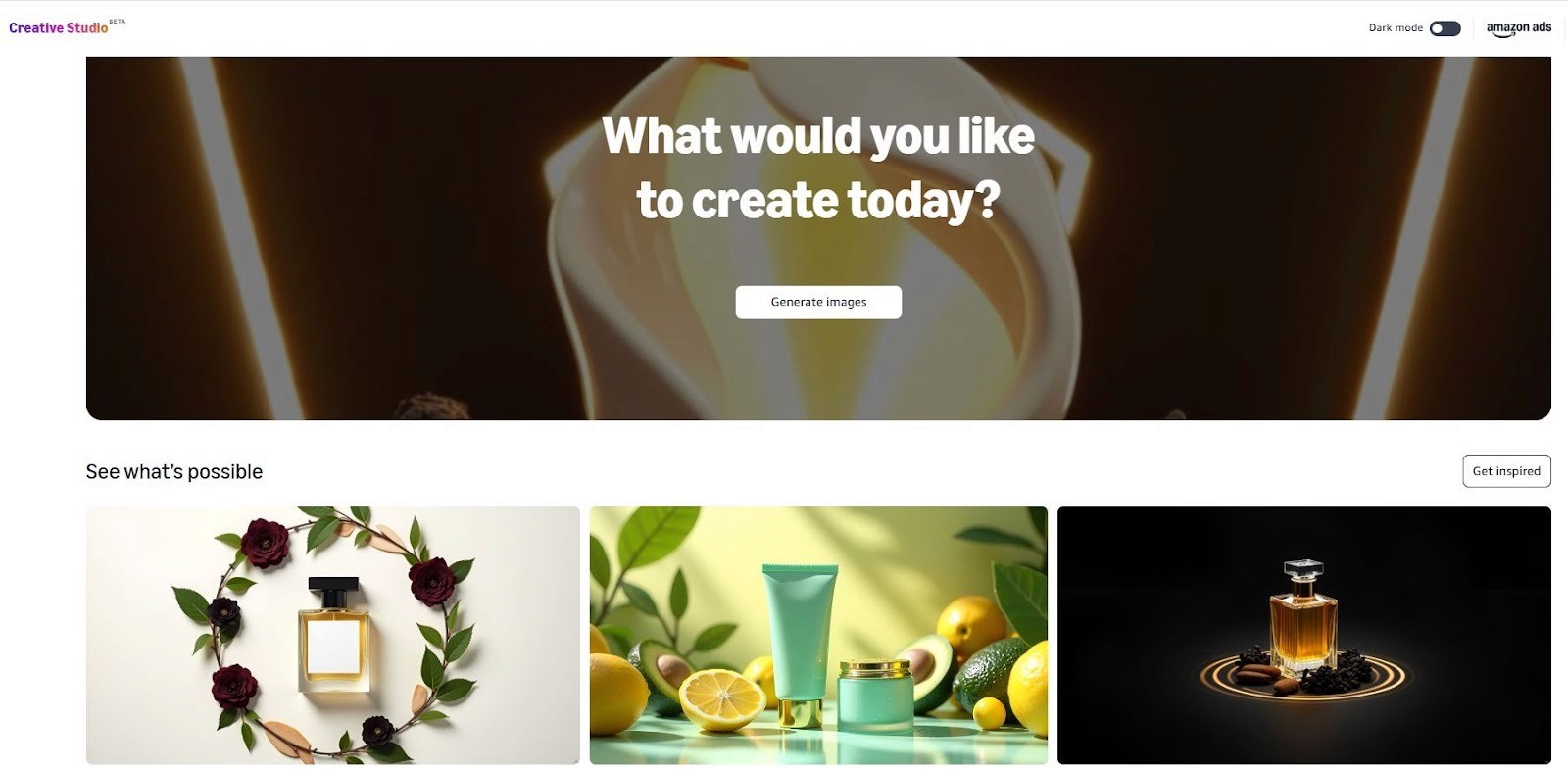
Tools like Amazon's Creative Agent can concept and execute creative for entire campaigns in hours. You can test multiple versions of your product images, headlines, and ad copy simultaneously, then let the data tell you what works.
What you should do:
Start using Amazon's Campaign Manager if you haven't already. It brings together Amazon's advertising console and DSP into one AI-powered command center.
Instead of juggling multiple dashboards and workflows, you get a single view that helps you set up, manage, and optimize campaigns faster.
Focus on strategic thinking, understanding your customers better, testing new products, or expanding to new markets.
Practical tip: Don't let AI write random claims that sound good but can't be backed up. Keep it grounded in what your listing can actually prove. Customers don't prefer marketing fluff with returns and bad reviews, and those hurt way more than boring copy ever could.
2. Live commerce and creators are changing how products sell
Remember when influencer marketing meant sending free products to Instagram personalities and hoping for a post? That era is over.
The creator economy is now a $43.9 billion industry (projected for 2026), and it's become an essential part of how consumers discover and buy products. Creators aren't just influencers anymore; they're content studios, product reviewers, and trusted advisors rolled into one.
Practical example:
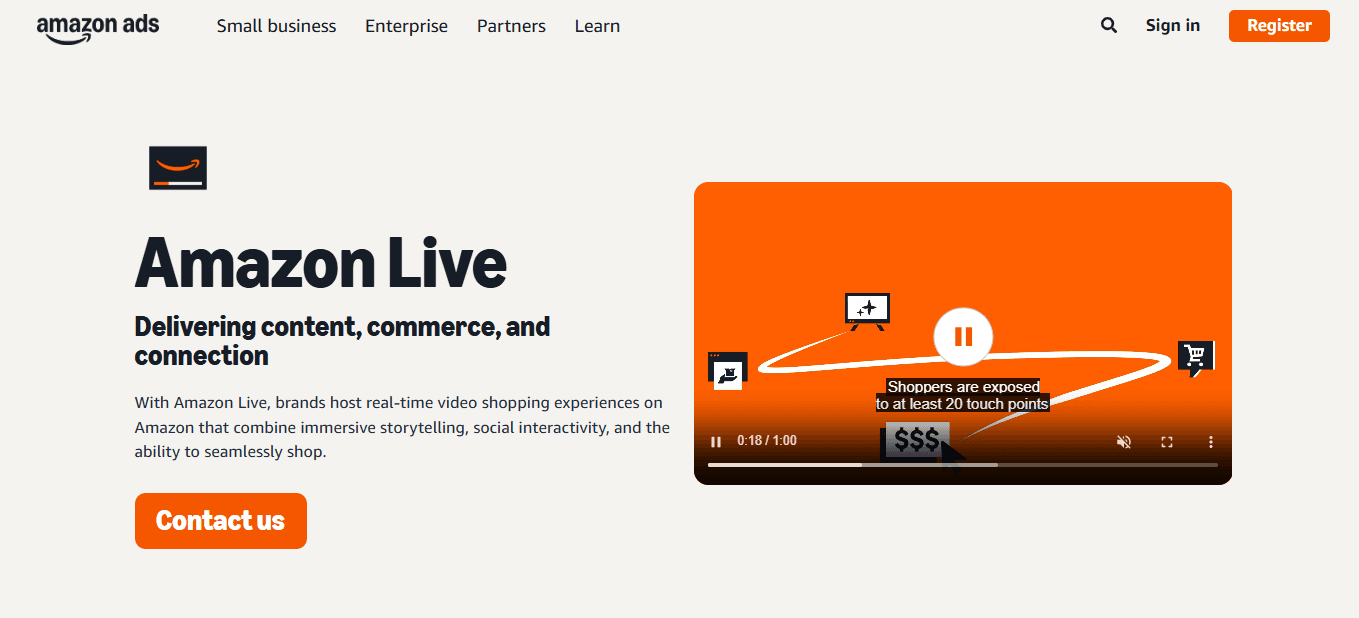
If you are selling fitness equipment. A fitness creator doing a live workout on Amazon Live can demonstrate their resistance bands in real-time, answer questions in the chat, and viewers can click to purchase without ever leaving the stream.
Amazon's ad research shows that 50% of consumers view entertainment as part of their path to purchase, and 72% have taken action like adding items to cart while watching content. Shop the Show on Prime Video lets customers discover and buy products directly while watching their favorite shows and sports.
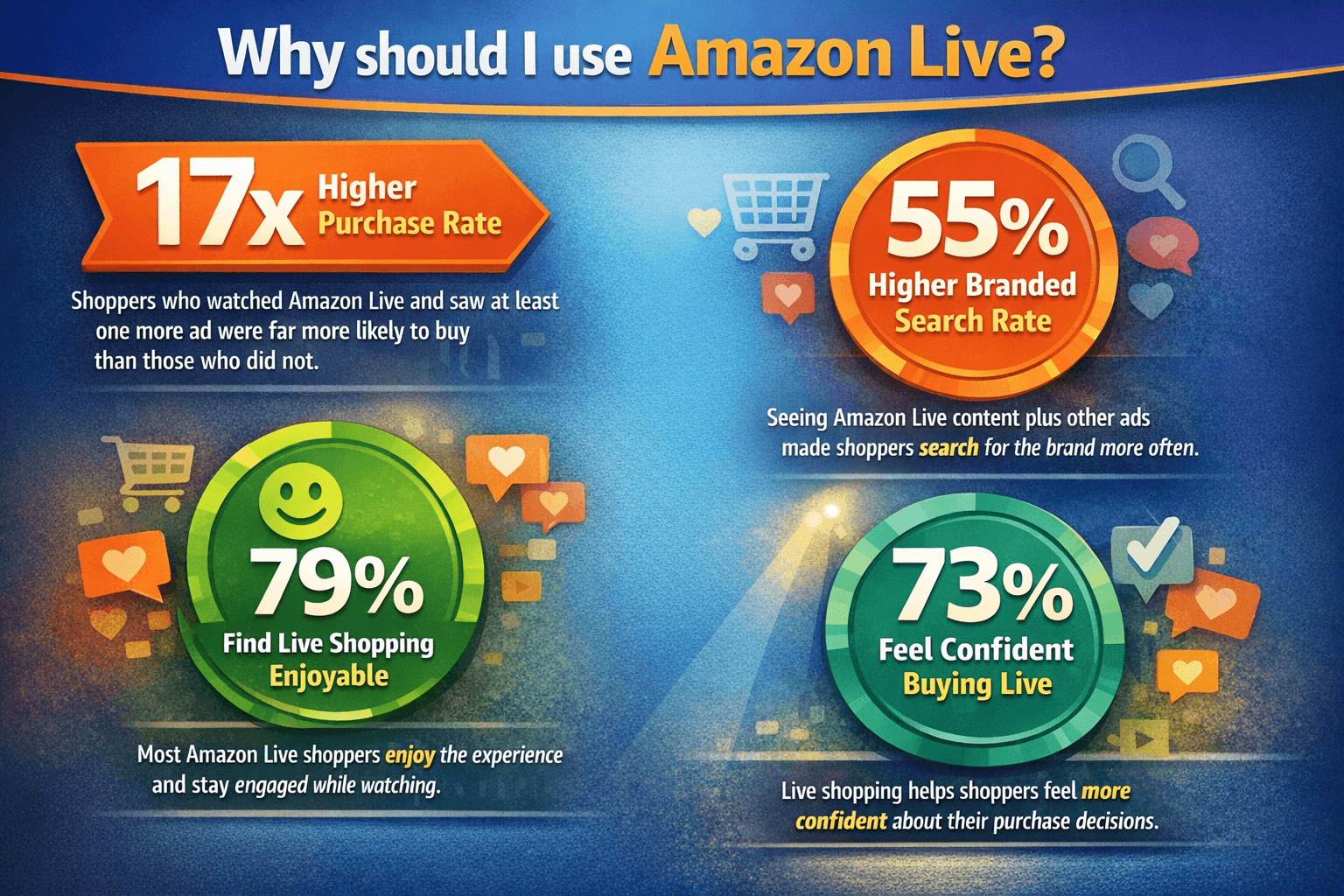
Data Source: Amazon ads
What you should do:
Consider partnering with micro-creators in your niche. You don't need celebrity endorsements; you need authentic voices that your target customers already trust.
Explore Amazon Live as a channel. Even if you start small with product demonstrations or Q&A sessions, you're meeting customers where they're already spending time.
Why it works in 2026: Customers trust “show me” more than “tell me.” A creator demo answers their questions faster than bullets ever will.
3. Interactive streaming ads are a game-changer
Streaming now commands 44.8% of all TV viewing and a 71% increase since 2021. Prime Video's ad-supported tier reaches over 315 million monthly viewers globally. But here's where it gets really interesting for Amazon sellers is that viewers don't just want to watch ads anymore; they want to interact with them.
Recent research shows that 79% of viewers find interactive ads more engaging than standard video ads, 78% say they're more attention-grabbing, and 72% say they feel more relevant. More importantly, interactive ads drove 3 to 4% lifts in brand opinion, consideration, purchase intent, and recommendation compared to standard ads.
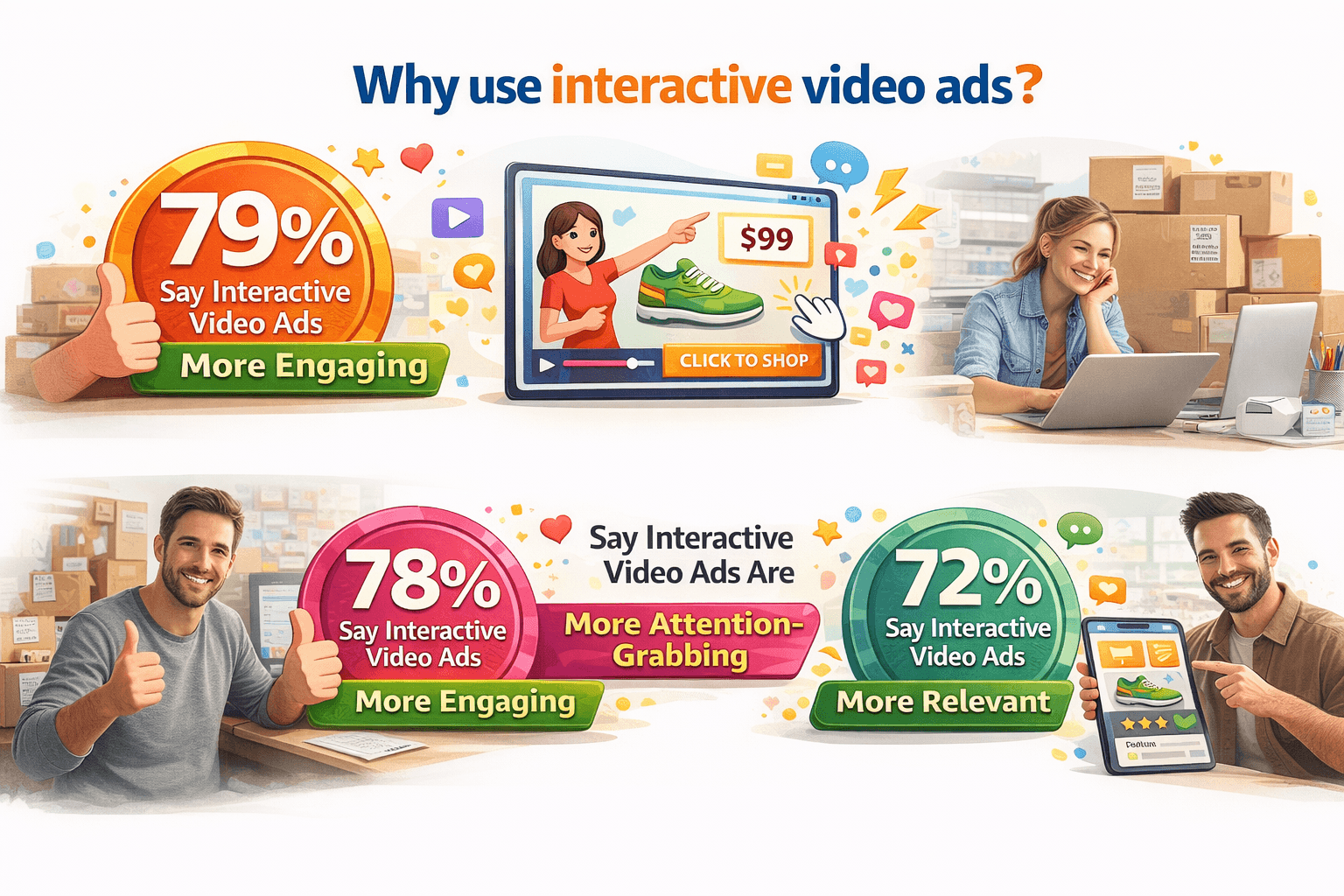
Data source: Amazon advertising
Practical example:
Imagine a customer watching Thursday Night Football on Prime Video, and an ad for camping gear appears. Instead of just watching, you can click to see the price, add the tent to your cart, or save it for later, all without leaving the game. As a seller, this means your ad isn't just building awareness; it's driving immediate action.
What you should do:
If you have the budget, test interactive video ads on Prime Video. These ads turn passive viewers into active shoppers.
Even pause ads, which appear when viewers pause their content, give you a moment to showcase your product when you have their full attention.
4. Omnichannel marketing approach
Customers don't care about your marketing channels. They don't think, "Now I'm shopping on Amazon, now I'm on social media, now I'm watching TV." They move fluidly between all these touchpoints, and they expect your brand to feel consistent everywhere.
By 2028, omnichannel retail media spending is expected to surpass 24.4%. Omnichannel customers spend 4% more in-store and 10% more online than single-channel customers.
What this means for sellers:
A customer sees your product in a Prime Video ad, searches for it on their phone during a commercial break, reads reviews on their laptop, and finally purchases it on the Amazon app the next day. If your messaging, branding, and product information aren't consistent across all these touchpoints, you're creating friction that kills conversions.
What you should do:
Use Amazon's full-funnel campaigns. You can reach shoppers from discovery through Prime Video and Twitch to conversion through Sponsored Products, all within a single campaign.
Make sure your brand presence is strong at every stage.
Your streaming ads should feel connected to your product listings, which should align with your display campaigns. When everything works together, your brand feels cohesive and trustworthy.
5. Understand how it all connects for growth
You run Sponsored Products ads. You test some display campaigns. Maybe you should try video ads. But if you're measuring each one in isolation, you're missing the bigger picture. That streaming ad might not directly convert, but it could be driving product searches that lead to purchases from your Sponsored Products ads later.
The most successful advertisers in 2026 understand full-funnel measurement and how awareness-building efforts influence consideration and how mid-funnel engagement drives conversion.
What you should do:
Use Amazon Marketing Cloud to get a complete view of your marketing effectiveness.
It provides privacy-safe insights across the customer journey, helping you understand which combinations of tactics drive the best results.
As an experienced Amazon agency working with 5,000+ brands across Amazon and other marketplaces, eStore Factory closely tracks how buyer behavior, advertising, and content are evolving. Based on what is already working and what is changing fast, here is how sellers should think about marketing in 2026.
A simple action plan for Amazon sellers in 2026
Stage | What to do | Why it matters |
Creative refresh | 3–5 new images targeting top objections 2 short videos (15–30 sec) showing real use cases | Fresh creative improves click-through rate and conversion |
Lower funnel (capture intent) | Sponsored Products on exact and phrase match keywords Sponsored Display targeting competitor ASINs | Captures shoppers who are ready to buy right now |
Mid to upper funnel (build awareness) | Sponsored Brands Video at the top of the search Streaming or interactive ads plus retargeting (if eligible) | Builds visibility before shoppers start comparing options |
Consistency check | Keep the same promise across ads, Store, and listing | Reduces confusion and increases conversion |
Track what matters | Weekly tracking of TACOS, conversion rate, and branded search lift Use AMC insights if available | Helps you identify what is working before the budget is wasted |
Final thoughts
The future of Amazon advertising depends on how well all these moving parts work together. What matters most is knowing where your gaps are and improving them step by step. You do not need to chase every trend at once. Start small, test what fits your brand, and build from there.
At eStore Factory, this is exactly how marketing strategies are managed, by connecting ads, content, creative, and data into one clear system instead of treating them as separate efforts. If the goal is to build a strategy that actually works together and scales over time, the right place to start is understanding what needs fixing first and taking action from there.
FAQs
Do I need a huge budget to use AI tools for Amazon advertising?
No, many AI-powered features like Campaign Manager are built into Amazon's advertising platform at no extra cost and scale with your budget.
How do interactive ads work for small sellers?
Interactive ads on Prime Video are accessible to all sellers and let viewers check prices or add products to their cart directly from the ad without leaving their screen.
Are interactive ads only for big brands?
No, Prime Video's ad platform is open to sellers of all sizes with performance-based pricing that works for any budget.
What should I track weekly in 2026 besides ACOS?
Track impression share, click-through rates, conversion rates, and how different channels work together to drive sales across the full funnel.
How do I know if my omnichannel strategy is working?
Use Amazon Marketing Cloud to see if customers who interact with multiple touchpoints convert faster and spend more than single-channel shoppers.
TL;DR
Shopping on Amazon is no longer linear; customers discover products across creators, streaming ads, search, and retargeting before buying.
AI is now a core creative partner, helping sellers test listings, ads, and messaging faster and at scale.
Live commerce and creator content build trust by showing products in real use, not just telling shoppers why to buy.
Interactive streaming ads turn passive viewers into active shoppers by letting them engage and buy instantly.
Omnichannel consistency matters; messaging must stay aligned across ads, listings, stores, and video placements.
Sellers who connect data across the full funnel and adapt quickly will outperform those relying on single-channel tactics.
Shopping doesn’t happen in a straight line anymore, and if you’re selling on Amazon, you feel that shift daily. A customer might see your product in a creator’s livestream, forget about it, later search for it on Amazon during a Prime Video ad break, compare three listings, read reviews on their phone while watching TV, and finally buy after a retargeting ad reminds them they left it in the cart.
Nearly 60% of consumers say they multitask more than ever before, and this "always-on" mentality has completely reshaped how people shop. Here's what really matters: 75% of consumers think about shopping multiple times per week, and 59% admit they get sidetracked exploring products they weren't even looking for. Your potential customers aren't "going shopping" anymore; they're always shopping.
So how do you win in this chaotic, multi-channel world?
This guide explains five AI marketing trends that are reshaping Amazon advertising in 2026 and, more importantly, what you can actually do about them.
1. AI is your new creative partner
AI isn't just about doing things faster; it's about doing things you couldn't do before. Amazon’s Rufus AI shopping assistant crossed 300 million users in 2025 and helped drive $12 billion in additional sales, beating Amazon’s own expectations.
In simple terms, Rufus is not just answering questions; it is actively helping shoppers decide what to buy, and those decisions are turning into real revenue at a massive scale.
But forget the big numbers for a second. What matters to you as an Amazon seller is this: AI can help you create product listing variations, test different ad creatives, and personalize your messaging at a scale that was impossible just a year ago.
Practical example:
Let's say you sell kitchen gadgets. Previously, creating a full advertising campaign from concept to execution might take you weeks. You'd brainstorm ideas, go through multiple revisions, and hope you got it right.
Tools like Amazon's Creative Agent can concept and execute creative for entire campaigns in hours. You can test multiple versions of your product images, headlines, and ad copy simultaneously, then let the data tell you what works.
What you should do:
Start using Amazon's Campaign Manager if you haven't already. It brings together Amazon's advertising console and DSP into one AI-powered command center.
Instead of juggling multiple dashboards and workflows, you get a single view that helps you set up, manage, and optimize campaigns faster.
Focus on strategic thinking, understanding your customers better, testing new products, or expanding to new markets.
Practical tip: Don't let AI write random claims that sound good but can't be backed up. Keep it grounded in what your listing can actually prove. Customers don't prefer marketing fluff with returns and bad reviews, and those hurt way more than boring copy ever could.
2. Live commerce and creators are changing how products sell
Remember when influencer marketing meant sending free products to Instagram personalities and hoping for a post? That era is over.
The creator economy is now a $43.9 billion industry (projected for 2026), and it's become an essential part of how consumers discover and buy products. Creators aren't just influencers anymore; they're content studios, product reviewers, and trusted advisors rolled into one.
Practical example:
If you are selling fitness equipment. A fitness creator doing a live workout on Amazon Live can demonstrate their resistance bands in real-time, answer questions in the chat, and viewers can click to purchase without ever leaving the stream.
Amazon's ad research shows that 50% of consumers view entertainment as part of their path to purchase, and 72% have taken action like adding items to cart while watching content. Shop the Show on Prime Video lets customers discover and buy products directly while watching their favorite shows and sports.
Data Source: Amazon ads
What you should do:
Consider partnering with micro-creators in your niche. You don't need celebrity endorsements; you need authentic voices that your target customers already trust.
Explore Amazon Live as a channel. Even if you start small with product demonstrations or Q&A sessions, you're meeting customers where they're already spending time.
Why it works in 2026: Customers trust “show me” more than “tell me.” A creator demo answers their questions faster than bullets ever will.
3. Interactive streaming ads are a game-changer
Streaming now commands 44.8% of all TV viewing and a 71% increase since 2021. Prime Video's ad-supported tier reaches over 315 million monthly viewers globally. But here's where it gets really interesting for Amazon sellers is that viewers don't just want to watch ads anymore; they want to interact with them.
Recent research shows that 79% of viewers find interactive ads more engaging than standard video ads, 78% say they're more attention-grabbing, and 72% say they feel more relevant. More importantly, interactive ads drove 3 to 4% lifts in brand opinion, consideration, purchase intent, and recommendation compared to standard ads.
Data source: Amazon advertising
Practical example:
Imagine a customer watching Thursday Night Football on Prime Video, and an ad for camping gear appears. Instead of just watching, you can click to see the price, add the tent to your cart, or save it for later, all without leaving the game. As a seller, this means your ad isn't just building awareness; it's driving immediate action.
What you should do:
If you have the budget, test interactive video ads on Prime Video. These ads turn passive viewers into active shoppers.
Even pause ads, which appear when viewers pause their content, give you a moment to showcase your product when you have their full attention.
4. Omnichannel marketing approach
Customers don't care about your marketing channels. They don't think, "Now I'm shopping on Amazon, now I'm on social media, now I'm watching TV." They move fluidly between all these touchpoints, and they expect your brand to feel consistent everywhere.
By 2028, omnichannel retail media spending is expected to surpass 24.4%. Omnichannel customers spend 4% more in-store and 10% more online than single-channel customers.
What this means for sellers:
A customer sees your product in a Prime Video ad, searches for it on their phone during a commercial break, reads reviews on their laptop, and finally purchases it on the Amazon app the next day. If your messaging, branding, and product information aren't consistent across all these touchpoints, you're creating friction that kills conversions.
What you should do:
Use Amazon's full-funnel campaigns. You can reach shoppers from discovery through Prime Video and Twitch to conversion through Sponsored Products, all within a single campaign.
Make sure your brand presence is strong at every stage.
Your streaming ads should feel connected to your product listings, which should align with your display campaigns. When everything works together, your brand feels cohesive and trustworthy.
5. Understand how it all connects for growth
You run Sponsored Products ads. You test some display campaigns. Maybe you should try video ads. But if you're measuring each one in isolation, you're missing the bigger picture. That streaming ad might not directly convert, but it could be driving product searches that lead to purchases from your Sponsored Products ads later.
The most successful advertisers in 2026 understand full-funnel measurement and how awareness-building efforts influence consideration and how mid-funnel engagement drives conversion.
What you should do:
Use Amazon Marketing Cloud to get a complete view of your marketing effectiveness.
It provides privacy-safe insights across the customer journey, helping you understand which combinations of tactics drive the best results.
As an experienced Amazon agency working with 5,000+ brands across Amazon and other marketplaces, eStore Factory closely tracks how buyer behavior, advertising, and content are evolving. Based on what is already working and what is changing fast, here is how sellers should think about marketing in 2026.
A simple action plan for Amazon sellers in 2026
Stage | What to do | Why it matters |
Creative refresh | 3–5 new images targeting top objections 2 short videos (15–30 sec) showing real use cases | Fresh creative improves click-through rate and conversion |
Lower funnel (capture intent) | Sponsored Products on exact and phrase match keywords Sponsored Display targeting competitor ASINs | Captures shoppers who are ready to buy right now |
Mid to upper funnel (build awareness) | Sponsored Brands Video at the top of the search Streaming or interactive ads plus retargeting (if eligible) | Builds visibility before shoppers start comparing options |
Consistency check | Keep the same promise across ads, Store, and listing | Reduces confusion and increases conversion |
Track what matters | Weekly tracking of TACOS, conversion rate, and branded search lift Use AMC insights if available | Helps you identify what is working before the budget is wasted |
Final thoughts
The future of Amazon advertising depends on how well all these moving parts work together. What matters most is knowing where your gaps are and improving them step by step. You do not need to chase every trend at once. Start small, test what fits your brand, and build from there.
At eStore Factory, this is exactly how marketing strategies are managed, by connecting ads, content, creative, and data into one clear system instead of treating them as separate efforts. If the goal is to build a strategy that actually works together and scales over time, the right place to start is understanding what needs fixing first and taking action from there.
FAQs
Do I need a huge budget to use AI tools for Amazon advertising?
No, many AI-powered features like Campaign Manager are built into Amazon's advertising platform at no extra cost and scale with your budget.
How do interactive ads work for small sellers?
Interactive ads on Prime Video are accessible to all sellers and let viewers check prices or add products to their cart directly from the ad without leaving their screen.
Are interactive ads only for big brands?
No, Prime Video's ad platform is open to sellers of all sizes with performance-based pricing that works for any budget.
What should I track weekly in 2026 besides ACOS?
Track impression share, click-through rates, conversion rates, and how different channels work together to drive sales across the full funnel.
How do I know if my omnichannel strategy is working?
Use Amazon Marketing Cloud to see if customers who interact with multiple touchpoints convert faster and spend more than single-channel shoppers.
TL;DR
Shopping on Amazon is no longer linear; customers discover products across creators, streaming ads, search, and retargeting before buying.
AI is now a core creative partner, helping sellers test listings, ads, and messaging faster and at scale.
Live commerce and creator content build trust by showing products in real use, not just telling shoppers why to buy.
Interactive streaming ads turn passive viewers into active shoppers by letting them engage and buy instantly.
Omnichannel consistency matters; messaging must stay aligned across ads, listings, stores, and video placements.
Sellers who connect data across the full funnel and adapt quickly will outperform those relying on single-channel tactics.
Shopping doesn’t happen in a straight line anymore, and if you’re selling on Amazon, you feel that shift daily. A customer might see your product in a creator’s livestream, forget about it, later search for it on Amazon during a Prime Video ad break, compare three listings, read reviews on their phone while watching TV, and finally buy after a retargeting ad reminds them they left it in the cart.
Nearly 60% of consumers say they multitask more than ever before, and this "always-on" mentality has completely reshaped how people shop. Here's what really matters: 75% of consumers think about shopping multiple times per week, and 59% admit they get sidetracked exploring products they weren't even looking for. Your potential customers aren't "going shopping" anymore; they're always shopping.
So how do you win in this chaotic, multi-channel world?
This guide explains five AI marketing trends that are reshaping Amazon advertising in 2026 and, more importantly, what you can actually do about them.
1. AI is your new creative partner
AI isn't just about doing things faster; it's about doing things you couldn't do before. Amazon’s Rufus AI shopping assistant crossed 300 million users in 2025 and helped drive $12 billion in additional sales, beating Amazon’s own expectations.
In simple terms, Rufus is not just answering questions; it is actively helping shoppers decide what to buy, and those decisions are turning into real revenue at a massive scale.
But forget the big numbers for a second. What matters to you as an Amazon seller is this: AI can help you create product listing variations, test different ad creatives, and personalize your messaging at a scale that was impossible just a year ago.
Practical example:
Let's say you sell kitchen gadgets. Previously, creating a full advertising campaign from concept to execution might take you weeks. You'd brainstorm ideas, go through multiple revisions, and hope you got it right.
Tools like Amazon's Creative Agent can concept and execute creative for entire campaigns in hours. You can test multiple versions of your product images, headlines, and ad copy simultaneously, then let the data tell you what works.
What you should do:
Start using Amazon's Campaign Manager if you haven't already. It brings together Amazon's advertising console and DSP into one AI-powered command center.
Instead of juggling multiple dashboards and workflows, you get a single view that helps you set up, manage, and optimize campaigns faster.
Focus on strategic thinking, understanding your customers better, testing new products, or expanding to new markets.
Practical tip: Don't let AI write random claims that sound good but can't be backed up. Keep it grounded in what your listing can actually prove. Customers don't prefer marketing fluff with returns and bad reviews, and those hurt way more than boring copy ever could.
2. Live commerce and creators are changing how products sell
Remember when influencer marketing meant sending free products to Instagram personalities and hoping for a post? That era is over.
The creator economy is now a $43.9 billion industry (projected for 2026), and it's become an essential part of how consumers discover and buy products. Creators aren't just influencers anymore; they're content studios, product reviewers, and trusted advisors rolled into one.
Practical example:
If you are selling fitness equipment. A fitness creator doing a live workout on Amazon Live can demonstrate their resistance bands in real-time, answer questions in the chat, and viewers can click to purchase without ever leaving the stream.
Amazon's ad research shows that 50% of consumers view entertainment as part of their path to purchase, and 72% have taken action like adding items to cart while watching content. Shop the Show on Prime Video lets customers discover and buy products directly while watching their favorite shows and sports.
Data Source: Amazon ads
What you should do:
Consider partnering with micro-creators in your niche. You don't need celebrity endorsements; you need authentic voices that your target customers already trust.
Explore Amazon Live as a channel. Even if you start small with product demonstrations or Q&A sessions, you're meeting customers where they're already spending time.
Why it works in 2026: Customers trust “show me” more than “tell me.” A creator demo answers their questions faster than bullets ever will.
3. Interactive streaming ads are a game-changer
Streaming now commands 44.8% of all TV viewing and a 71% increase since 2021. Prime Video's ad-supported tier reaches over 315 million monthly viewers globally. But here's where it gets really interesting for Amazon sellers is that viewers don't just want to watch ads anymore; they want to interact with them.
Recent research shows that 79% of viewers find interactive ads more engaging than standard video ads, 78% say they're more attention-grabbing, and 72% say they feel more relevant. More importantly, interactive ads drove 3 to 4% lifts in brand opinion, consideration, purchase intent, and recommendation compared to standard ads.
Data source: Amazon advertising
Practical example:
Imagine a customer watching Thursday Night Football on Prime Video, and an ad for camping gear appears. Instead of just watching, you can click to see the price, add the tent to your cart, or save it for later, all without leaving the game. As a seller, this means your ad isn't just building awareness; it's driving immediate action.
What you should do:
If you have the budget, test interactive video ads on Prime Video. These ads turn passive viewers into active shoppers.
Even pause ads, which appear when viewers pause their content, give you a moment to showcase your product when you have their full attention.
4. Omnichannel marketing approach
Customers don't care about your marketing channels. They don't think, "Now I'm shopping on Amazon, now I'm on social media, now I'm watching TV." They move fluidly between all these touchpoints, and they expect your brand to feel consistent everywhere.
By 2028, omnichannel retail media spending is expected to surpass 24.4%. Omnichannel customers spend 4% more in-store and 10% more online than single-channel customers.
What this means for sellers:
A customer sees your product in a Prime Video ad, searches for it on their phone during a commercial break, reads reviews on their laptop, and finally purchases it on the Amazon app the next day. If your messaging, branding, and product information aren't consistent across all these touchpoints, you're creating friction that kills conversions.
What you should do:
Use Amazon's full-funnel campaigns. You can reach shoppers from discovery through Prime Video and Twitch to conversion through Sponsored Products, all within a single campaign.
Make sure your brand presence is strong at every stage.
Your streaming ads should feel connected to your product listings, which should align with your display campaigns. When everything works together, your brand feels cohesive and trustworthy.
5. Understand how it all connects for growth
You run Sponsored Products ads. You test some display campaigns. Maybe you should try video ads. But if you're measuring each one in isolation, you're missing the bigger picture. That streaming ad might not directly convert, but it could be driving product searches that lead to purchases from your Sponsored Products ads later.
The most successful advertisers in 2026 understand full-funnel measurement and how awareness-building efforts influence consideration and how mid-funnel engagement drives conversion.
What you should do:
Use Amazon Marketing Cloud to get a complete view of your marketing effectiveness.
It provides privacy-safe insights across the customer journey, helping you understand which combinations of tactics drive the best results.
As an experienced Amazon agency working with 5,000+ brands across Amazon and other marketplaces, eStore Factory closely tracks how buyer behavior, advertising, and content are evolving. Based on what is already working and what is changing fast, here is how sellers should think about marketing in 2026.
A simple action plan for Amazon sellers in 2026
Stage | What to do | Why it matters |
Creative refresh | 3–5 new images targeting top objections 2 short videos (15–30 sec) showing real use cases | Fresh creative improves click-through rate and conversion |
Lower funnel (capture intent) | Sponsored Products on exact and phrase match keywords Sponsored Display targeting competitor ASINs | Captures shoppers who are ready to buy right now |
Mid to upper funnel (build awareness) | Sponsored Brands Video at the top of the search Streaming or interactive ads plus retargeting (if eligible) | Builds visibility before shoppers start comparing options |
Consistency check | Keep the same promise across ads, Store, and listing | Reduces confusion and increases conversion |
Track what matters | Weekly tracking of TACOS, conversion rate, and branded search lift Use AMC insights if available | Helps you identify what is working before the budget is wasted |
Final thoughts
The future of Amazon advertising depends on how well all these moving parts work together. What matters most is knowing where your gaps are and improving them step by step. You do not need to chase every trend at once. Start small, test what fits your brand, and build from there.
At eStore Factory, this is exactly how marketing strategies are managed, by connecting ads, content, creative, and data into one clear system instead of treating them as separate efforts. If the goal is to build a strategy that actually works together and scales over time, the right place to start is understanding what needs fixing first and taking action from there.
FAQs
Do I need a huge budget to use AI tools for Amazon advertising?
No, many AI-powered features like Campaign Manager are built into Amazon's advertising platform at no extra cost and scale with your budget.
How do interactive ads work for small sellers?
Interactive ads on Prime Video are accessible to all sellers and let viewers check prices or add products to their cart directly from the ad without leaving their screen.
Are interactive ads only for big brands?
No, Prime Video's ad platform is open to sellers of all sizes with performance-based pricing that works for any budget.
What should I track weekly in 2026 besides ACOS?
Track impression share, click-through rates, conversion rates, and how different channels work together to drive sales across the full funnel.
How do I know if my omnichannel strategy is working?
Use Amazon Marketing Cloud to see if customers who interact with multiple touchpoints convert faster and spend more than single-channel shoppers.





eStore Factory is a full-service agency for Amazon Sellers dedicated to building end-to-end strategies for brands of all sizes.


SERVICES FOR AMAZON
Product Setup ON AMAZON
GRAPHICS & BRANDING SERVICES
PPC MANAGEMENT
© Copyright 2014 - 2026. All Rights Reserved.
eStore Factory is a full-service agency for Amazon Sellers dedicated to building end-to-end strategies for brands of all sizes.
SERVICES FOR AMAZON
Product Setup ON AMAZON
GRAPHICS & BRANDING SERVICES
PPC MANAGEMENT
© Copyright 2014 - 2026. All Rights Reserved.
eStore Factory is a full-service agency for Amazon Sellers dedicated to building end-to-end strategies for brands of all sizes.
SERVICES FOR AMAZON
Product Setup ON AMAZON
GRAPHICS & BRANDING SERVICES
PPC MANAGEMENT
© Copyright 2014 - 2026. All Rights Reserved.